Tapsters, Temperance & Unions
Beer in Albany was never only a drink. It was a tax base, a town hall, a job, a moral battlefield and a ladder into power. This page follows the people around the barrel: the tapsters and the tax farmers, the enslaved draymen and the union brewers, the temperance crusaders who made Albany their headquarters, and the brewers who ran the city.
Running through four centuries of Albany drinking is one thread: the license. Whoever decided who could tap a cask, who could carry it through the streets, and what each barrel owed the government held real power. That was true of Stuyvesant's excise farmer in the 1650s, of the city's Board of Excise in 1859, and of the political machine that, within months of legal beer's return in 1933, partly owned one of the city's breweries. Inference
The story of the breweries themselves is told in the chapters. This page is about everyone else.
Tapsters and beer carriers
In Dutch Beverwijck, the village that grew up around Fort Orange in the 1650s, the beer trade was split by law into separate jobs. Brewers brewed. Tapsters sold by the can or the mug in their houses. And licensed beer carriers moved the casks between them. A man was not supposed to do two of these at once.
The court enforced the split. On 11 May 1655 the brewer Pieter Bronck was "enjoined from tapping strong beer, for the reason that he brews the same," on pain of 25 guilders for a first offense, 50 for a second and "arbitrary correction" for a third. Solid1 The same day, a man who asked to be made a beer carrier was turned down: the court said "the brewers' helpers thus far perform this work themselves and that for this reason it can not be taken away from them." Solid
By 1658 there was a licensed carrier, and moving beer without him was an offense in itself. That June "Flip, the brewer" was prosecuted because his servant had taken beer "without the help of the beer carrier" from the brewhouse into the cellar of a glazier who tapped on the side. The officer demanded 200 guilders and a two-year suspension; the court told the parties to settle. Solid2 One early brewer was known around town simply as "Marten de bierkracker," which the translator Charles Gehring glosses as "beer carrier." Solid3
The tap houses were busy, rowdy places, and the court tried to cap what they could charge. In February 1653 innkeepers were limited to 9 stivers for a can of beer and 8 for a small measure of brandy, with a fine of 100 guilders for a first offense, double for a second and "arbitrary punishment" for a third. Solid4
Women behind the tap
Several of Beverwijck's tapsters were women. Maria Goossens was among the tapsters named in a 1655 order, and on 6 October 1656, with Stuyvesant himself presiding, Egbertje Egberts and Dirckje Harmens were each fined 300 guilders for selling beer to Native people. Solid5 The New York State Museum's "People of Colonial Albany" project profiles Egbertie Egberts as an inn or tavern keeper of the 1650s. Single source6
Up the Mohawk at Schenectady in 1672, Arent van Curler's widow, Antonia Slaghboom, was licensed to trade. It was "thought also that her license would stop the quarrels of the other two tapsters," one of whom was a man of Mohawk descent. Single source7 So far, though, no woman has been found named as a brewer in the translated Beverwijck minutes. Women poured; whether any of them brewed for sale is still an open question. Inference
The line from these women runs straight through Albany history. In the 1760s and '70s Martha Vernor kept "Widow Vernor's Tavern" in the first ward. Single source8 And in the 1903 city directory, roughly 21 of Albany's saloons were listed under women's names, among them Anastatia Dunn at 120 Broadway, Julia Kelly at 192 Orange and Catherine Wilson at 249 Green. Approximate9 Some were probably widows keeping a husband's license alive; one entry reads simply "Kelly Hugh Mrs." Inference
The tavern as town hall
Under the English, who took the colony in 1664, the line between brewing and tapping blurred. When two innkeepers asked the Albany court in 1677 to stop brewers retailing beer "by the small measure," the court said it could not forbid any inhabitant to do so. Solid10 Brewers and tavernkeepers began to tie their businesses together by marriage instead. In 1692 Agnietje Gansevoort, daughter of the brewer Harmen Harmanse Gansevoort, married the tavernkeeper Thomas Williams. His tap was supplied by the Gansevoort brewery, and by 1699 he was sheriff of Albany County. Single source11
A city inventory of 1756 counted three innholders, three liquor sellers, two tavernkeepers, five "dram" shops and one meadhouse. Single source12 Those houses did far more than pour. The most famous was Richard Cartwright's. Born in London around 1720, he was "early Albany's most notable innkeeper," and by the 1760s his tavern was called the King's Arms. It offered boarding and stabling, served as a post office, sold land and lottery tickets, and hosted Albany's first Masonic lodge, with Cartwright as master. Single source13 On 20 July 1772 the city gave Governor Tryon a public dinner "at Cartwright's Tavern." Solid14
Then the King's Arms became the cradle of a revolution against the king. The first public meeting of the Albany Committee of Correspondence, the city's revolutionary government, was held there, apparently on 24 January 1775. Solid The date rests on a single listing. Single source13 In 1775 and 1776 the Committee also met at Widow Vernor's. Single source8 Two taverns, one of them run by a widow, housed Albany's first republican government. Inference
Cartwright himself chose the other side. Munsell says that at the outbreak of the war the tavern's sign, "which bore the device of the king's arms, was forced off by a party, one night, and burnt in State street." Single source14 Cartwright refused the loyalty oaths and was banished in July 1778; revolutionaries beat him and vandalized his tavern and home, and he left for Canada with his family in four wagons. He died at Kingston, Ontario, in 1794. Single source13
Where was the King's Arms?
The State Museum puts Cartwright's tavern in the "Southside." Munsell places "the King's Arms" on the northwest corner of Green and Beaver streets, and says it was later called the "City Tavern." Munsell may be describing the building of the 1780s rather than Cartwright's original house. Disputed15
Drink, Native people and the color line
The taverns' rules also drew lines around who could drink and who could celebrate. An early English city ordinance fined anyone who would "Give Sell or otherwise Dispose of any Rum brandy Spirits wine beer ale Syder or any other Strong Liquors whatsoever to any Indian" forty shillings, half to the informer. In 1706 the council also banned taking Native people's clothing, arms or ammunition in pawn "for Liquor or any thing Else." Solid16
A century later the target was Pinkster, the spring festival that in Albany had become closely tied to the city's Black community. Inference On 28 April 1811 the Common Council banned any "tent, booth or stall … for the purpose of vending any spirituous liquors, beer, mead or cider" on the days "commonly called pinkster," along with dancing and parading, under a $10 fine or jail. Solid16
Groggeries, saloons and beer gardens
The young republic's Albany was soaked. In 1809 one writer claimed the city had 265 taverns and retail spirit shops and that "in Albany one-fifth" of the people lived off the trade. A correspondent of the Gazette rebutted him with an actual count of licenses: 59 taverns, 74 petty groceries and 84 permits, or 202 licensees once double licenses were removed. Single source16 In 1830 a temperance committee counted 415 "taverns and groceries" for about 25,000 people, along with 500 "habitual drunkards" and 4,000 "tipplers." It was an advocacy count and probably slanted. Single source17
In August 1851 a committee of the Rechabites, a temperance order, went ward by ward and reported "744 groggeries in this city, where liquor is dealt out by the glass, being one groggery to about every 67 persons, including men, women and children." About 426 were licensed and "some 320" sold without one. The First Ward led with 108. Single source18 When the city's new Board of Excise first met in May 1859, Dr. B. P. Staats told it that "last year over 600 persons sold liquor in this city, and we have one rumseller for every twenty-five male inhabitants." The board set a license at $30. Solid19
The Raines Law and the "hotel" saloon
New York's Raines Law of 23 March 1896 barred Sunday drinking except in "hotels" with ten rooms that served food. It produced a crop of fake hotels and the notorious "brick sandwich," food served only to satisfy the law. Solid20 Just outside the city, at Stop 33 on the Albany–Schenectady road, Ward Hennessy ran a "Raines Hotel." He was "a local politician of more than ordinary ability," and a 1943 Times-Union writer claimed that many state laws had been born in Hennessy's back room. Single source21 No count of Raines hotels inside the city itself has been found.
Saloons in 1903
The 1903 city directory lists roughly 290 saloons, on top of the retail liquor dealers. Approximate9 Broadway had the most, with about 37, followed by South Pearl (22), Green (21), Central Avenue (19) and Madison Avenue (14). Approximate South Pearl, Green and Madison ran through the South End, home to many of the city's Irish and German families. Inference By then the bartenders had their own union, Bartenders' Alliance No. 228, meeting at Red Men's Hall. Solid
Beer gardens and German halls
Lager came to Albany with German immigrants in the 1850s, and with it a different way of drinking: in singing societies, gymnastic halls and picnic groves rather than in stand-up groggeries. Albany's first German singing society, the Liederkranz, formed in 1849. Single source22 On 16 August 1852 the city saw the "First public procession of the Turn-Verein and Sing-Verein." Single source23 By 1886 the Eintracht singing society had 38 active and 175 passive members, and the Apollo society, founded in 1884, sang German pieces in the Assembly Chamber of the new Capitol. Solid24
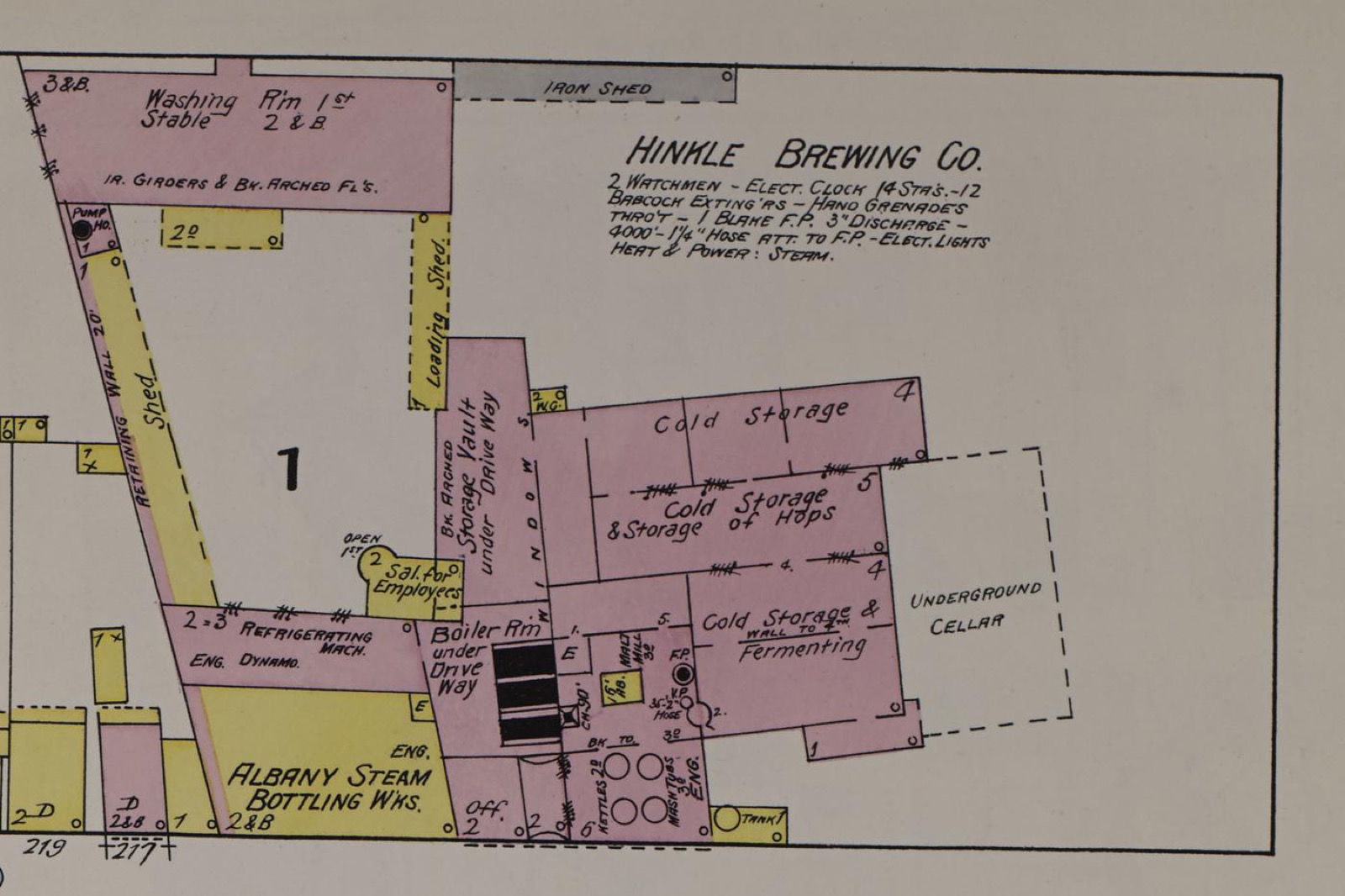
The 1892 fire-insurance map shows Lang's Turn Hall on the block between Central and Washington avenues, among malt houses and a cooper's shop. Solid25 The Hinckel brewery on Park Avenue had a "Saloon for Employees" on its own grounds. Solid26 Albany's first German Day was held on 19 September 1904, and the next year's ended with a picnic at Dobler Park, a picnic ground linked to the Dobler brewery whose location has not yet been pinned down. Single source23
That world did not survive the First World War. According to the history of Albany's German-American club, most German clubs folded under wartime anti-German pressure, and "1918 marked the end of the German influence in Albany." Single source
Machine-era bars
National Prohibition (see the Prohibition chapter) drove Albany's bars underground. William Kennedy's research names speakeasies such as Swifty Mead's, Big Charlie's in the South End, Mullen's, O'Malley's and the Rain-Bo Room of the Kenmore Hotel. Single source27 When legal beer returned on 7 April 1933, the Democratic machine was waiting. By July 1933 Dan and Ed O'Connell partly owned the Hedrick brewery, and their nephew ran its beer distribution. Single source28 In 1933 the state drinking age was 18. Solid29
"You poured the machine's beer"
Albany memory, including that of the site owner's stepfather, holds that a bar owner in the O'Connell years was expected to carry Hedrick's. John Oliver, who drove a Hedrick's truck for his father as a teenager, remembers drivers leaving five kegs where a bar needed two.30 No court case, State Liquor Authority action or investigation report has been found to confirm it. Oral history
Counting the taps, 1705–1903
How many places could you buy a drink in Albany? Nobody kept a consistent count, so this chart gathers every count in our research. They don't all measure the same thing: some count licenses, some count every outlet including unlicensed ones, and the 1903 figure counts only saloon listings in a directory. Two are for the whole county, not just the city. Each kind has its own marker. Hover or tap a point for its source and confidence.
"Per 1,000 people" divides each city count by the city's population at the nearest federal census (1810–1900), so it is approximate. The 1706, 1756, 1863 (county) and 1868 counts have no matching population figure and drop out in that view. Census figures: U.S. Census via Wikipedia.
The numbers behind the chart
| Year | Count | What was counted | Area | Per 1,000 | Confidence |
|---|
Read with care, the counts do tell a story. Relative to population, Albany's drinking places were thickest in the early 1800s, at somewhere near 17 to 19 licensees for every thousand residents. By 1851 there were roughly 8 licensed outlets per thousand, or nearly 15 counting the unlicensed ones. By 1903, saloon listings alone came to about 3 per thousand. Inference Some of that fall is real, and some of it is the changing yardstick. Inference
The population figures used here are federal census counts. Solid31 The State Commissioner of Excise's annual reports, which list every liquor-tax certificate by county after 1896, would fill the long gap after 1868. They have not yet been reached.
Who did the work
Enslaved draymen
The earliest direct record linking slavery and Albany beer is a city by-law of 1686:
"That noe Negroe or other Slave doe drive any carte within this Citty under the penaltye of Twenty Shillings to be paid by the owner of such slave for Each offence. Brewers drays or Carriages for Beer only excepted."Albany by-laws, 1686
Solid32 The exception only makes sense if enslaved Africans were already driving the brewers' drays, and the city wanted them to keep doing it. Inference Four years later the city ruled that no beer could "be carried from any Brewer, but by the said Porters appointed by us," and that no strong beer could reach a tapster "with out a ticket from ye said Collector." The old Dutch beer-carrier system had survived the English conquest. Solid33
The brewing households held enslaved people for another century. Harme Gansevoort's Market Street complex was "served by numerous slaves," including Jan, a Pawnee captive who lived with the family for about ten years before Sir William Johnson ordered him sold in the West Indies. Single source34 The brewer Bastian T. Visscher held two enslaved people in 1790, Solid35 and General Peter Gansevoort, the family's last brewer, had four in 1800. Solid36 James Boyd of the Arch Street brewery also held four in 1800. Solid
In 1793 a disastrous fire began in Leonard Gansevoort's stable. An enslaved man named Pomp was convicted of setting it, along with two enslaved women, Bet and Dean. A large crowd gathered for their execution in January 1794, but the three were reprieved; Pomp was hanged on 11 April 1794, and "his dying confessions were sold at No. 2 Pearl street." Solid18 Whether this Leonard, a lawyer of the next generation, had any part in the family brewery is unknown. Inference No record yet found names an enslaved worker inside an Albany brewery.
Irish and German hands
By the mid-1800s the brewery workforce was made up largely of immigrants, and the trade split along ethnic lines. Albany's ale houses were run largely by English-, Scots- and Irish-descended owners; the lager breweries that appeared from the late 1850s were German. Inference The divide reached the national level. When the federal beer tax prompted the founding of the U.S. Brewers' Association in 1862, its proceedings were held in German for years, with English translation "out of consideration for the ale and porter brewers, most of whom spoke only English." Solid37 Albany, the country's great ale city, sat on the English-speaking side of that room. Inference
The Irish side of Albany also ran a strong temperance current. The city had a Hibernian Temperance Society by 1832, a Catholic temperance society at St. Mary's from 1840, whose pledge was "for life", and huge crowds for the Irish "apostle of temperance," Father Theobald Mathew, in 1849 and 1851 (see below). Brewing and abstinence grew up in the same Irish neighborhoods. Inference
The work was dangerous. In March 1865 the brewer Charles U. Burt, 45, was killed when a coping stone fell on his head while he supervised repairs on Centre Street. Solid Two months later, on 6 May 1865, "the steam boiler in James Quinn's brewery in North Ferry street, exploded, by which two persons lost their lives." Solid38 Quinn's brewery would become Quinn & Nolan, and then Beverwyck.
How many hands
The county history of 1886 gives the first firm-by-firm headcounts. Solid39
| Firm (c. 1886) | Workers | Note |
|---|---|---|
| Amsdell Brothers (ale) | 150 | 80,000 bbl ale output; 160,000 bu. malt |
| Albany Brewing Co. (ale and porter) | 125 | 150,000 bbl capacity; 200,000 bu. malt |
| Hinckel's Cataract Brewery (lager) | ~75 | 35,000 bbl output |
| J. W. Tillinghast (maltster) | ~30 | ~300,000 bu. capacity |
| Thomas McCredie (maltster) | 25 | 250,000 bu. |
| Story Brothers (maltster) | 15 | 175,000 bu. |
A decade later the state factory inspector counted 50 men and 3 women at Hinckel's in 1897, 11 at Hedrick's and 8 at Kirchner's. Down the street from the breweries, the Kampf shovel-and-bung shop at Jefferson Street had 4 workers that year and 5 in 1899. Solid4041
The unions
Albany's brewery workers organized in the 1880s, and they organized in two camps, ale and lager.
The ale and porter men came first. They "were first organized on September 6, 1886, as Local Assembly 8,546, K. of L.," a local of the Knights of Labor. Solid42 The German lager brewers followed: Lager Beer Brewers Union No. 15 was "organized April 3, 1887, at Eintracht Hall, South Pearl street, with the membership of nineteen, which gained to a membership of fifty in just two months." Its first president was Charles Moog, and dues began at 35 cents a month. Solid
"In the spring of 1887, Albany joined the ranks of organized brewery workers."Hermann Schlüter, 1910
The brewery workers' own historian, Hermann Schlüter, says that in Albany "not only the actual brewers, but also the beer-wagon drivers, were organized into one union. However, these two organizations soon split up." On 31 May 1887 Albany's brewery owners signed a contract fixing the working day at 11 hours in summer and 10 in winter, with wages of $12, $14 and $16 a week. Solid37
A year later the brewers' pool in New York City locked out its union men and broke the union downstate. Schlüter still lists Albany among the few places where "advantages had been gained in the form of contracts." Solid The 1888 lockout was argued before the State Board of Mediation and Arbitration, created in Albany in 1886. Solid37 Albany had trouble of its own that spring: a city chronicle records a "Strike of Knights of Labor employees of breweries" on 5 May 1888, though no details have yet been found. Single source23 In a book published that same year, the Dobler brewery boasted that "through his liberality Mr. Dobler has never experienced strikes." Single source43
On 8 June 1888 the lager brewers were one of the five unions that founded the Albany Central Federation of Labor, alongside the printers, cigarmakers, bakers and bricklayers. Solid The ale workers reorganized on 5 January 1897 as Local 129 of the United Brewery Workmen; the next year it claimed 100 members and jurisdiction over "every ale brewery in the City of Albany." The lager local had 73 members, and all five of its officers were German-born. One, William C. Schmitt, lived at 24 Jefferson Street. Solid42
The "1885" ale union listing
An Albany directory filed on archive.org as 1885 lists "Ale and Porter Workers Union, No. 129, meets at Beaver Block. John D. Fitzgerald, Pres." That seemed to put the union before 1886. But our directory research found that the archive.org items labeled 1885 and 1898 are swapped: the one labeled 1885 is really the 1898 directory. Solid44 That fits the union's own history, which says the number 129 dates from 1897 and names John Fitzgerald as president. So the listing most likely belongs to 1898, and the ale workers' first organization remains 6 September 1886. Inference
By 1903 the city directory listed a full set of beer-trade locals: Solid9
| Union (1903) | Met at | Officer named |
|---|---|---|
| Ale and Porter Workers' Union No. 129 | Labor Temple | Isaac Greyston, Sec. |
| Lager Beer Brewers' Union No. 15 | Grand Army Hall | Paul Kemmer, Sec. |
| Beer Drivers' Union No. 88 | Grand Army Hall | |
| Maltsters' Union No. 154 | Labor Temple | John Hartigan, Sec. |
| Bottle Beer Workers' Union No. 1 | Liederkranz Hall | A. A. Schade, 165 Jefferson St., Sec. |
| Coopers' International Union No. 7 | Labor Temple | |
| Bartenders' Alliance No. 228 | Red Men's Hall | Thomas J. Fitzpatrick, Sec. |
Read as a whole, the roster shows the split was ethnic as well as technical. The ale local's officers had English and Irish names and met at the Labor Temple; the lager and bottling locals had German officers, and the bottlers met at Liederkranz Hall, named for a German singing society. Inference The bottlers' secretary lived at 165 Jefferson Street, a few doors from the Bung Factory. Single source The owners organized too: an Albany Brewers Association was formed in 1902. Single source45
The tax man
Excise farmers and a tapsters' revolt
New Netherland taxed beer at the tap, and it did so by farming: the right to collect the excise was auctioned to the highest bidder, who then squeezed the tapsters for what he could. For November 1657 to October 1658, the farmer at Fort Orange, Beverwijck, Rensselaerswyck, Catskill and Esopus could collect 4 guilders per tun of domestic beer, 6 guilders per tun of "oversea or foreign beer," and 16 guilders per hogshead of French or Rhenish wine, paying the Company quarterly in wampum. Solid38 No burgher or tapster could take in strong beer without a permit from the farmer, and brewers were warned not to deliver until they saw one. Solid46 Even beer paid as wages was taxed: in 1658 the farmer went after a man who had a half-barrel of beer brought home "without permit." He said "he earned it with his fellow workers." Solid2
Brewers sat on the bench that had to enforce all this, and they didn't like it. In December 1652 two magistrates who were also brewers, Rutger Jacobsz and Volckert Jansz, objected to publishing Stuyvesant's ordinance on the tapsters' excise. Solid4
In 1655–56 the quarrel turned into a standoff. Three Fort Orange tapsters refused to have their casks gauged. The Company's commissary, Johan de Deckere, lured one of them, Pieter Adriaensz, nicknamed "Soogemackelyck," to his house and arrested him. The sloop to take him away wasn't ready, so, De Deckere reported, "I made him sleep in my bed and by my side." Solid Left overnight with three soldiers and De Deckere's enslaved African servant, the prisoner "was suffered in their presence to run away," and took refuge in the house of the patroon's director, Jan Baptist van Rensselaer. Solid47 The other tapsters armed themselves, and when De Deckere came with a posse they pointed at Van Rensselaer and answered:
"There sits the Lord, he will answer for me."The Fort Orange tapsters, 1656
Solid14 The court called "the matter about the disobedient tapsters … the most scandalous; some being willing rather to fight to the last drop of blood." Solid47 Underneath it was a fight over jurisdiction between the Company and the patroon, carried on through the tap houses: the patroon protected "his" tapsters from the Company's tax. Inference
Licenses under the English
The English kept the excise and added licensing. In 1676 the governor's council ordered that all strong beer brewed for sale in Albany and Rensselaerswyck "shall pay equall to the tappers accyse." Solid10 In 1684 the court required every brewer in Albany County to hold a license and post a £100 bond not to sell to Native people and a £20 bond to pay the excise. Solid48
An early city ordinance warned that "no person shall sell strong Liquor by Retaile without Lycence, upon pain and penalty of forfeiting ye summe of £5." Solid49 For October 1705 to October 1706 the list of "Retailers of Strong Liquors of the Citty & County of alby" ran to 38 persons. Solid16
Sometimes the city simply took its taxes in beer. In August 1695, to pay city charges, the council resolved that the county should buy enough grain "to brew 3 pypes of table Beer," and that two sitting councilmen, the brewers Benoni van Corlaer and Albert Ryckman, should brew it. Munsell indexed the entry "Beer, brewed to pay taxes." Solid50
The Board of Excise
The 19th-century city licensed through a Board of Excise, and it made money. Between 1858 and 1864 Albany County took in $137,028.63 in license fees, while paying a special constable $1,820.50 to report violations. Solid In November 1863 the federal collector counted 1,013 liquor dealers in the city and county. Solid By 1868 the county was granting 640 licenses a year, but enforcement had collapsed into a tangle of lawsuits. On 6 January 1869 the supervisors agreed to settle every excise judgment for 25 cents on the dollar and asked the legislature to hand licensing to the police. Solid39
The war tax and the bunghole stamp
The federal government came for beer in the Civil War. "Congress at Washington decreed, July 1, 1862, that in order to help meet the expenses of the war each barrel of beer was to pay a war tax of one dollar." The brewers lobbied it down to 60 cents for March 1863 to April 1864, and the tax prompted the founding of the U.S. Brewers' Association that November. Solid37
The way it was collected matters to this website. Schlüter explains that "a stamp is placed over the bunghole in such a manner that it has to be destroyed when the barrel is opened." Solid The bung, the wooden stopper that sealed every keg, became the point where the government checked that its tax had been paid. Inference The Bung Factory at 186 Jefferson Street, which made bungs for Albany's brewers, stands at the end of that line.
Temperance capital
If Albany was an ale city, it was also, for a generation, the headquarters of the war on drink. On 2 April 1829 "a meeting of citizens friendly to temperance was called to form a state temperance society. It was held at the Capitol, and Reuben H. Walworth chosen president." Solid17 The New York State Temperance Society held its first anniversary in the Assembly chamber, and on New Year's Day 1830, "in consequence of the temperance movement many houses served coffee to their guests instead of liquors, for the first time." Solid
By 1832 Albany had 14 temperance societies with 4,164 members, in a city of about 26,000. The First Ward society alone had 1,227 members under Erastus Corning; there were also a Hibernian Temperance Society with 123 members, an African Temperance Society with 192, and canal workers', apprentices' and furriers' societies. Solid15 The organizers noted that of the 336 Albanians over ten who died in the cholera year of 1832, "but two were members of temperance societies." Solid
Edward Delavan
The movement's engine was Edward C. Delavan. He helped found the state society in 1829 and later chaired its publishing committee. Solid5152 He had made his fortune as a wholesale wine merchant in New York City; by 1860 he was worth about $625,000. He paid for more than 36 million anti-liquor tracts, handed out 150,000 copies of colored lithographs of drunkards' stomachs, and in 1846 mailed an anti-liquor leaflet to every household in the state. Single source53
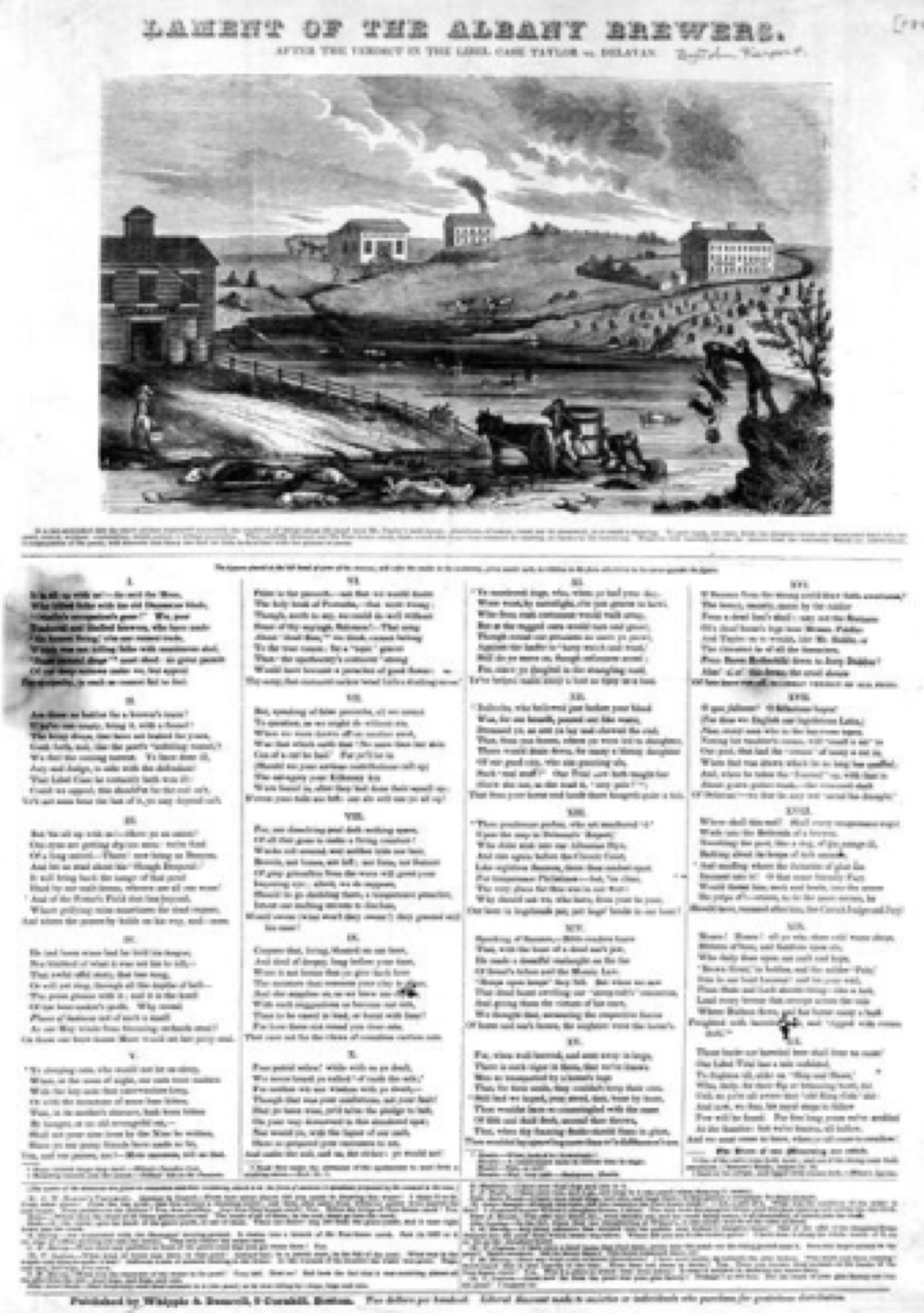
Unlike many temperance men, Delavan attacked beer and wine as well as spirits, and that put him on a collision course with Albany's brewers. On 12 February 1835 the Albany Evening Journal printed his charge that John Taylor's malt house at State and Lark streets used water from a pond full of filth and dead animals. Eight maltsters sued, with damages laid at $300,000 in all; Taylor's own suit claimed $74,000. Solid54 Only Taylor's case went to trial. It opened on 21 April 1840, ran six days and heard seventy witnesses, and the verdict was "FOR THE DEFENDANT, WITH COSTS." The other suits were never prosecuted. Solid39 The full story is in the ale chapter.
The British traveler J. S. Buckingham, in Albany in 1838, gave the city its title:
"One of the causes, if not the principal cause, of the general temperance of the people of Albany, is the influence exerted by the operations of the New York State Temperance Society, of which this has for many years past been the head-quarters."J. S. Buckingham, 1838
Solid17 Buckingham also mocked the "absurd, and selfish war of the rich against ardent spirits, which are drank chiefly by the poor, while indulging the free use of wine, beer and cider." Solid
Pledges and processions
In January 1842 the reformed drunkard John H. W. Hawkins came to lecture. On the day he arrived, his diary says, "Governor William H. Seward, of New York, with many other distinguished gentlemen, signed the total-abstinence pledge." Solid55 On 4 July 1842 "the wives and children of the Washingtonian temperance societies formed a procession, with banners and badges, and marched to the National Garden on Broadway." Solid A Sons of Temperance division was founded in 1844 under the name "Delavan Division." Solid39
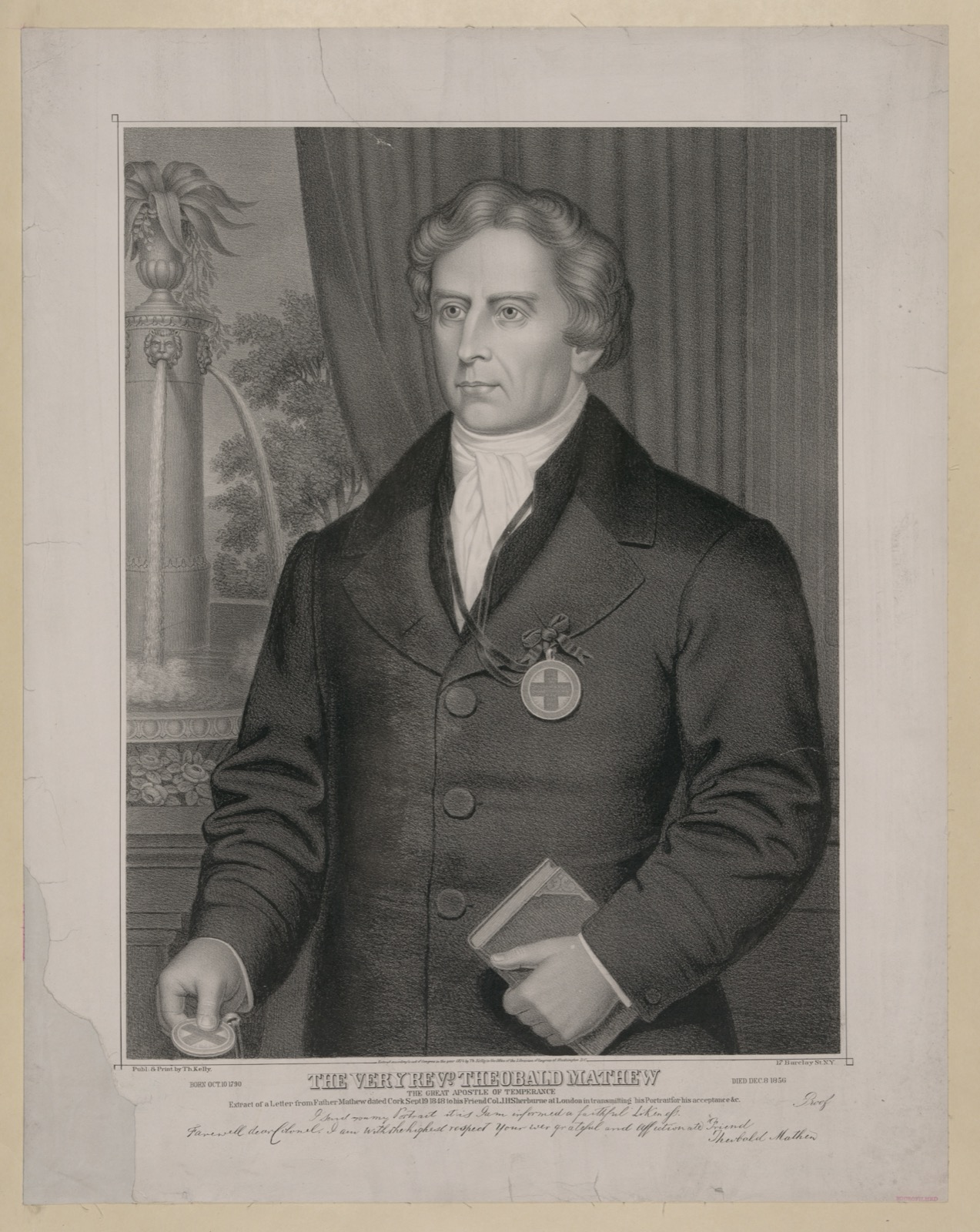
Father Mathew came in 1849 and again in 1851. At his meeting of 19 September 1851, Mrs. Susannah C. Maguire "signed pledge numbered 6,100,990," by his count of pledges taken worldwide. Solid39 From 1848 to 1852 a "S. Meyers" published The Telegraph and Temperance Journal in Albany. Solid This was very probably Stephen Myers, the city's Underground Railroad leader. Inference
The petition, the law and the acquittal
On 21 January 1853 a delegation of the Women's State Temperance Convention was allowed into the Assembly chamber to present memorials "signed by 28,000 persons, for the abolition of the sale of liquors." Solid16 That summer the Assembly defeated the temperance bill 56 to 54. Solid In April 1854, according to one city chronicle, "Opponents of temperance reform call out the governor and he is addressed by the editor of the Freie Blatter," the German paper, "following which a serious riot ensues." Single source23 It came days after Governor Horatio Seymour vetoed that year's prohibition bill, so the crowd was probably cheering the veto. Inference
In 1855 the drys won. On 10 April "the Delavan House was splendidly illuminated, on the occasion of the passage of the temperance bill." Solid39 "An Act to Prevent Intemperance, Pauperism and Crime" took effect on 4 July 1855. Solid Three days later "the first complaint under the new liquor law was made against the proprietor of the City Hotel." Solid56 The test case was against William Landon, owner of the leading hotel in the capital, charged with serving two guests French brandy on 6 July. An Albany jury acquitted him on 21 July 1855, and in March 1856 the Court of Appeals struck the whole law down in Wynehamer v. People. Solid57 That Landon's hotel was the City Hotel is an inference from the matching dates. Inference
The temperance hotel that served drinks
Delavan's temperance hotel on Broadway opened in 1845. Solid58 The University at Albany's biography says that although it was marketed as dry, its management let liquor in through an undisclosed loophole. Single source51 By the 1880s the Delavan House was the legislature's hotel, and the Sons of Temperance met "opposite Delavan House." Solid39 A temperance hotel had become the capital's political clubhouse. Inference
An Albany auxiliary of the Woman's Christian Temperance Union was organized in 1873. Solid39
Wet votes in a dry Capitol
National Prohibition was ratified in Albany's own Capitol, over the votes of Albany's own legislators. On 23 January 1919 the Assembly ratified the Eighteenth Amendment 81 to 66; among the eleven Republicans who broke ranks against their party's caucus were Assemblymen Malone and Welsh of Albany. Solid59 On 29 January the Senate followed, 27 to 24, and Senator Henry M. Sage of Albany was one of two Republicans who "bolted the caucus" and voted no. Solid60 Sage had said he was "as much opposed to this Federal amendment as any man in this room." Solid61
Four weeks later the Anti-Saloon League held its state convention in Albany. Its superintendent, William H. Anderson, accused German brewers of being "willing to jeopardize the American nation in order to save beer." Solid62 The breweries didn't all go quietly: in January 1921 federal agents sealed the Hedrick plant "for alleged making of beer containing more than one-half of 1 per cent. alcohol." Solid63 The full story of the dry years is in the Prohibition chapter.
Temperance vs. Tap
Two centuries of push and pull, side by side. Temperance and the law on the left, the tap and the trade on the right. Use the buttons to show one side only.
Sources for each entry are cited in the text above. The 1925 raid: 64. The 1849 figure: 65.
Brewers in power
From the first Dutch bench to the 20th-century machine, Albany's brewers held office. Sometimes they sold beer to the very government they sat in.
Rutger Jacobsz, a Beverwijck brewer, sat as a magistrate in the 1650s; his family's stained-glass window, with mash tubs and paddles in the crest, hung in the 1656 Dutch church. Solid66 Albert Janse Ryckman, "perhaps the most prominent Albany brewmaster of the late seventeenth century," was an alderman from 1686 and mayor of Albany in 1702–03, and in 1736 still called himself an "Albany county brewer." Solid67 Leendert Gansevoort was alderman for the third ward from 1734 to 1739 and "on a number of occasions … delivered beer for the city government." Single source68 His son Johannes, who took over the brewery in 1762 by the State Museum's account, was an assistant alderman and in 1766 signed the Albany Sons of Liberty constitution. Solid69
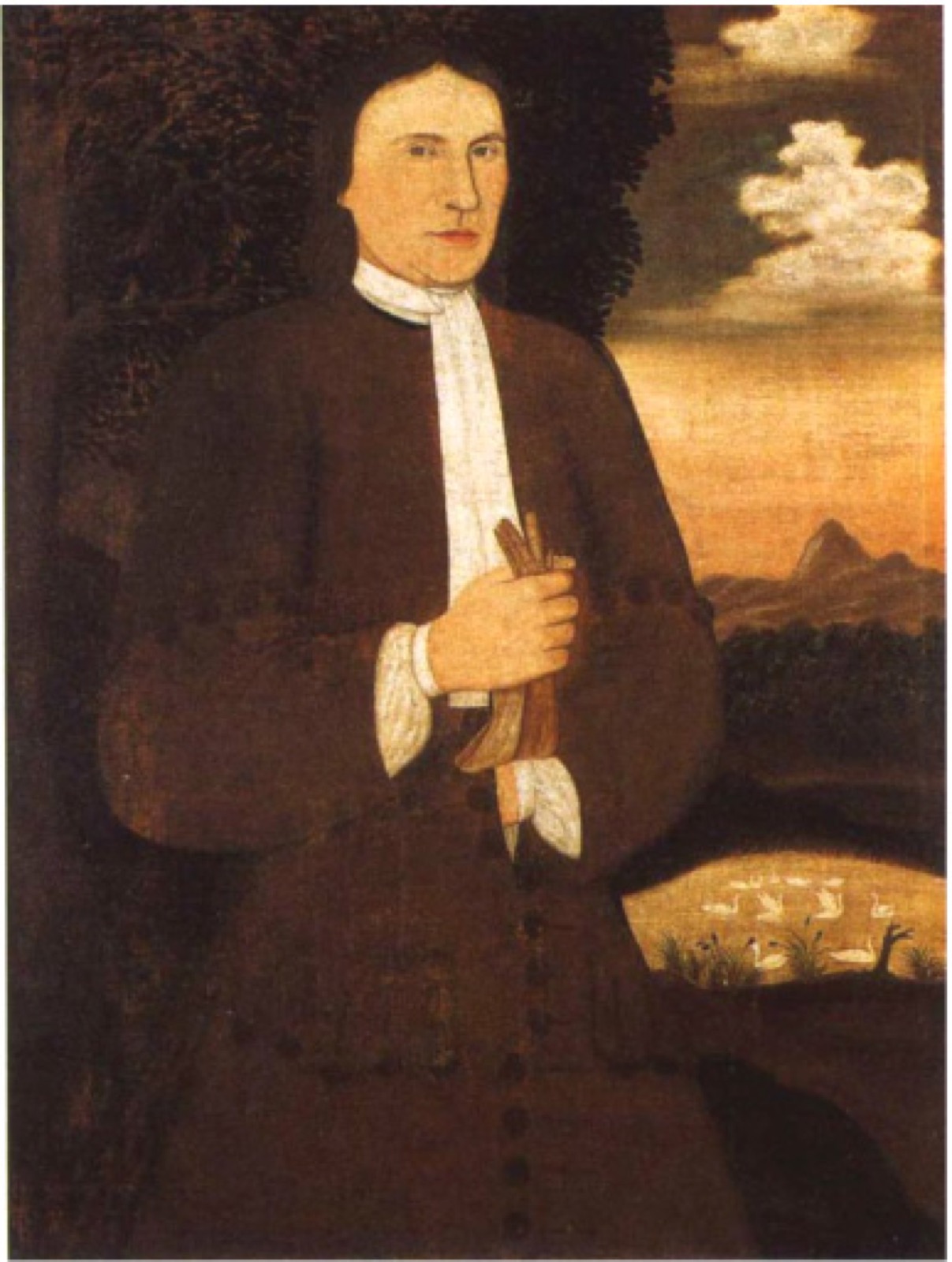
The ale age had its mayor in John Taylor, the era's biggest brewer, who served one term in 1848–49. His 1863 obituary claimed he had been "several times elected," but the official list shows one term. Solid70 George I. Amsdell sat as a Ninth Ward alderman around 1862–63. Solid39
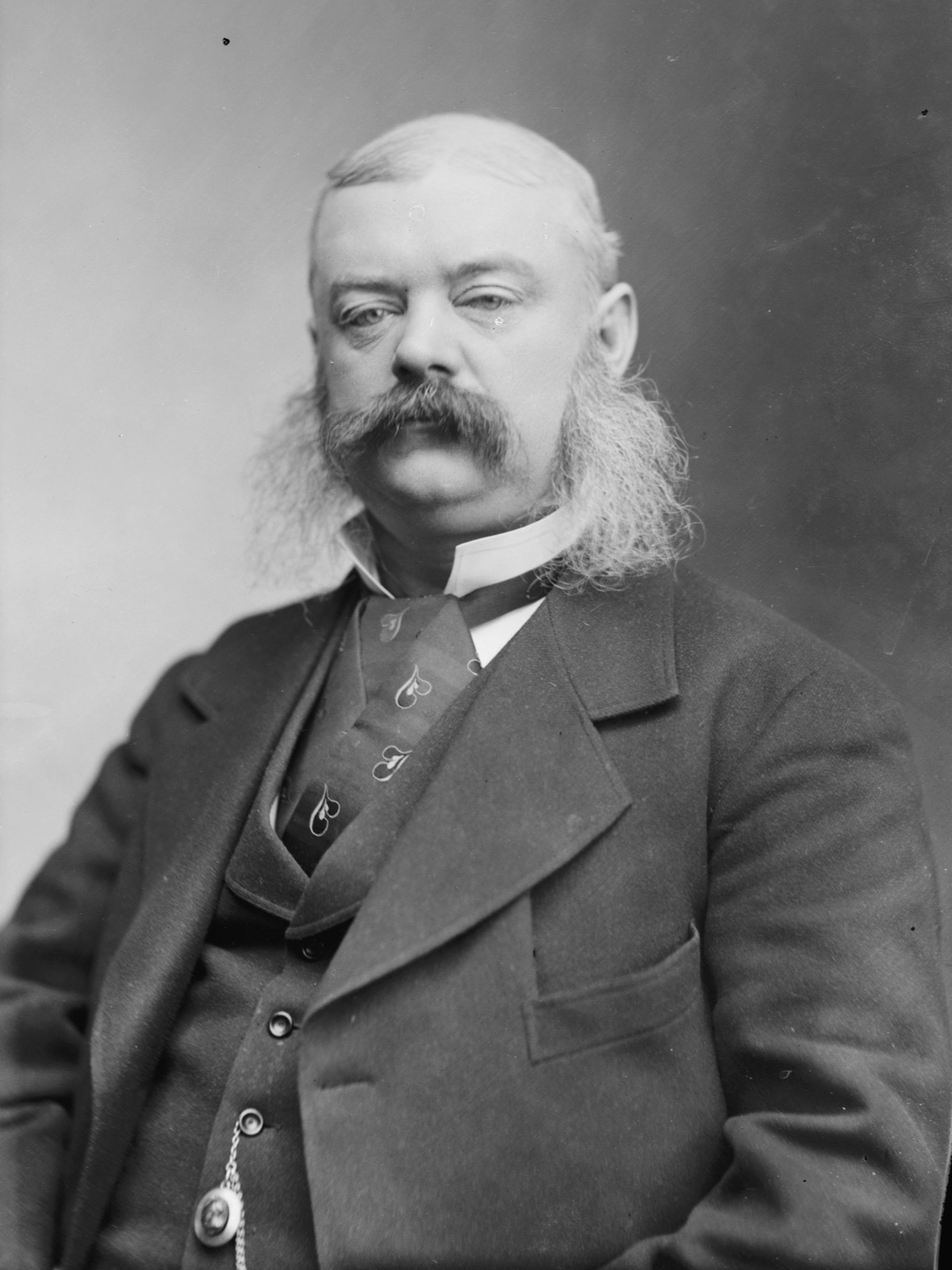
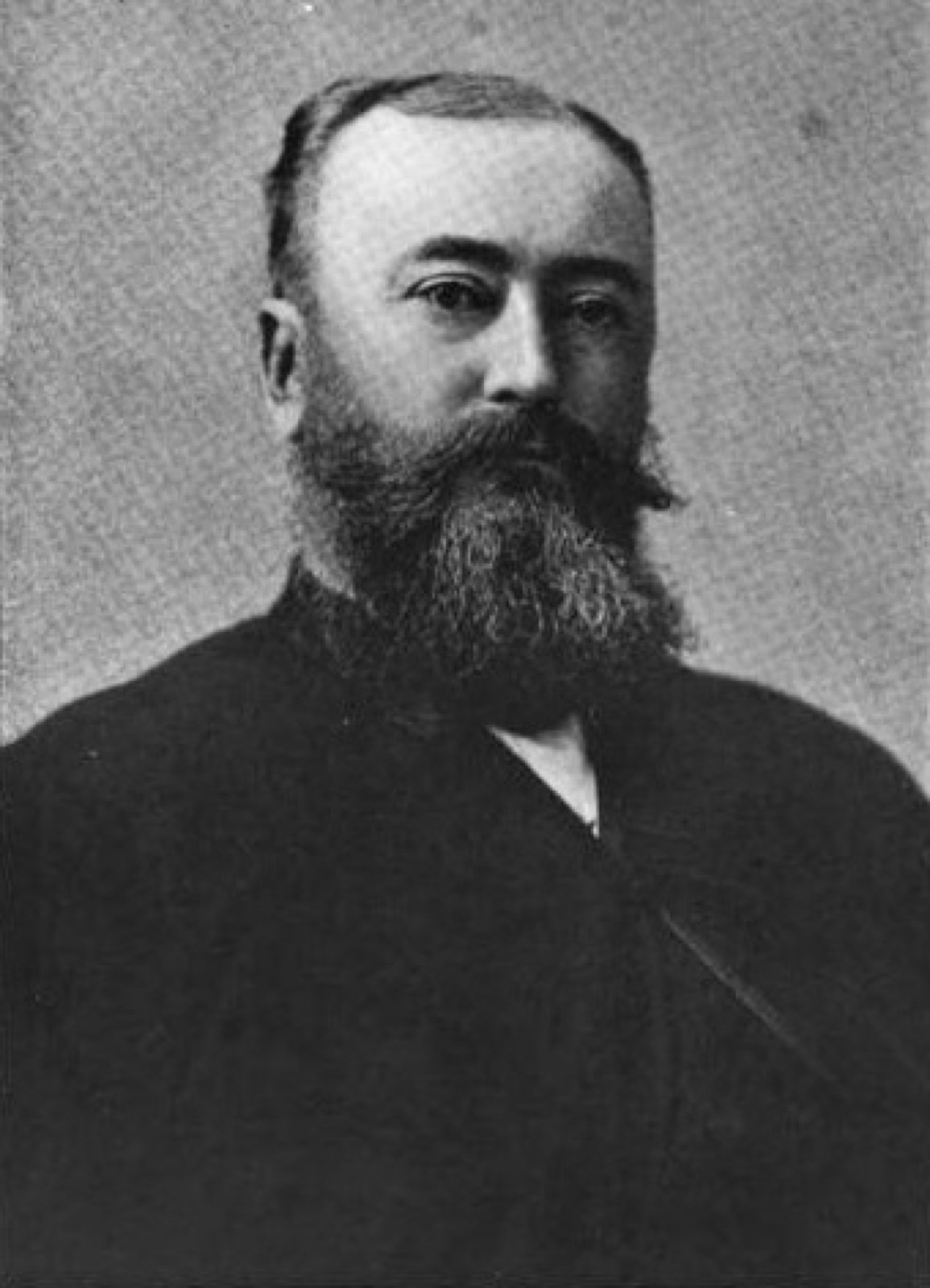
The partners of Quinn & Nolan, later the Beverwyck brewery, went further. Terence J. Quinn, who brewed with his father James, served on the Common Council in 1869–72 and in the Assembly in 1873, and went to Congress in March 1877. He died in office in June 1878. Solid71 His partner, Michael N. Nolan, born in County Carlow, became mayor in 1878, Albany's first Irish and first Catholic mayor, and from 1881 to 1883 sat in Congress at the same time. Solid72 His mayoralty ended badly. Dr. John Swinburne contested the 1882 election, alleging bribery and ballot-stuffing, and after more than a year of litigation Nolan resigned on 24 June 1883. Single source73
Then came the machine. By July 1933, TIME reported, the political bosses Dan and Ed O'Connell partly owned the Hedrick brewery, and their nephew John J. "Butch" O'Connell Jr., who had been in charge of its beer distribution, was kidnapped and held for a $250,000 ransom demand. Single source28
The strip below puts the offices side by side. Each bar is a term in office; tap or select one for details.
Cat soup and leather breeches
Albany ale had nicknames, not all of them kind. In an 1841 account of the reformed drunkard John Hawkins: "Albany ale, or 'cat soup,' as it was termed, was a favorite beverage, to which he was particularly partial. He would sometimes begin with this, when at a public house; call for a pint tumbler, and, while reading a newspaper, drink a little at a time, till it was drained." Solid74 The cat may come from the pond-water scandal: the 1840 broadside about the trial shows a man drowning cats beside the malt house. Inference
A temperance paper of the same year glossed "O.K." as "Oil of Karrion, or Albany Ale," and a ladies' magazine of 1840 sneered at "the porter-house drunkard who blurts blasphemy over his mug of Albany ale." Single source75
The jokes were old. Writing in 1858 about the Gansevoort brewery that had stood at Broadway and Maiden Lane, Joel Munsell recorded:
"It was a pleasantry with the old people of those times, to say that when the brewer wanted to give a special flavor to a choice brewing, he would wash his old leather breeches in it; showing that the slanders against Albany brewers and Albany ale is not a new thing but of considerable antiquity."Joel Munsell, Annals of Albany, 1858
Solid17 Munsell adds that "many a barrel of good beer, made of wheat," had been brewed on that spot, that the brewery was torn down in 1807, and that as late as 1833, when the dome of Stanwix Hall went up on the site, old Dutch Albanians called it "old Harme Gansevoort's brew kettle turned upside down." Solid
The Melville connection
Herman Melville's mother was a Gansevoort, and the brewers Leendert, Johannes and General Peter Gansevoort were his ancestors; General Peter was his grandfather. Solid His uncles Peter and Herman Gansevoort built Stanwix Hall in 1833 on the old brewery lot at Broadway and Maiden Lane, and the young Melville used it as his Albany base. Single source But the link is family and buildings only. A full-text search of nine of his books, including Redburn, Moby-Dick and Pierre, found no mention of Albany ale or Albany beer. Solid
Still unknown
- Whether any woman brewed for sale in Dutch Beverwijck.
- The names of enslaved people who worked inside Albany's breweries.
- What happened in the May 1888 Albany brewery strike, and whether any later strike took place.
- How many Raines-law hotels and saloons Albany had between 1896 and 1917. The State Excise Commissioner's reports should say.
- When and how the O'Connells bought into Hedrick, and which brother held the shares.
- What the "De Luxe Brewery" raided in 1925 really was.
Sources for this page
- Minutes of the Court of Fort Orange and Beverwyck, vol. 1 (van Laer, trans.) archive.org
- Minutes of the Court of Fort Orange and Beverwyck, vol. 2 archive.org
- Gehring, Fort Orange Court Minutes 1652–1660 (NNI) newnetherlandinstitute.org
- Van Laer, Minutes of the Court of Fort Orange and Beverwyck, vol. 1 archive.org
- NAHC Encyclopedia encyclopedia.nahc-mapping.org
- NYSM, People of Colonial Albany: Egbertie Egberts exhibitions.nysm.nysed.gov
- Munsell, Collections on the History of Albany, vol. 4 pt. 2 archive.org
- NYSM: Martha Vernor exhibitions.nysm.nysed.gov
- Albany City Directory, 1903 archive.org
- Court Minutes of Albany, Rensselaerswyck and Schenectady, vol. II (NNI) newnetherlandinstitute.org
- NYSM: Agnietje Gansevoort exhibitions.nysm.nysed.gov
- NYSM: Public houses in colonial Albany exhibitions.nysm.nysed.gov
- NYSM: Richard Cartwright exhibitions.nysm.nysed.gov
- Munsell, Annals of Albany, vol. 2 archive.org
- Munsell, Collections, vol. 2 archive.org
- Munsell, Annals of Albany, vol. 5 archive.org
- Munsell, Annals of Albany, vol. 9 archive.org
- Munsell, Annals of Albany, vol. 3 archive.org
- Munsell, Collections, vol. 1 archive.org
- Wikipedia: Raines law en.wikipedia.org
- Hoxsie!: Ward Hennessy's Raines hotel hoxsie.org
- Finding Your Past: history of the German-American Club findingyourpast.blogspot.com
- Reynolds, Albany Chronicles (1906) archive.org
- Howell & Tenney, Bi-centennial History of the County of Albany (1886) archive.org
- Sanborn map of Albany, 1892, sheet 58 tile.loc.gov
- Sanborn map of Albany, 1892, sheet 43 tile.loc.gov
- WMHT: Albany's underbelly during Prohibition www.wmht.org
- TIME, 24 July 1933 time.com
- Wikipedia: New York State Liquor Authority en.wikipedia.org
- John Oliver, "Still the Best" (Substack, 2023) louchelife.substack.com
- Wikipedia: Albany, New York (U.S. Census figures) en.wikipedia.org
- Munsell, Annals of Albany, vol. 7 archive.org
- Munsell, Annals of Albany, vol. 2 archive.org
- NYSM: Harme Gansevoort exhibitions.nysm.nysed.gov
- NYSM: Bastian T. Visscher exhibitions.nysm.nysed.gov
- NYSM: Peter Gansevoort exhibitions.nysm.nysed.gov
- Schlüter, The Brewing Industry and the Brewery Workers' Movement in America (1910) archive.org
- Munsell, Collections, vol. 3 archive.org
- Howell & Tenney, Bi-centennial History of the County of Albany (1886) archive.org
- NY Factory Inspector, annual report 1897 archive.org
- NY Factory Inspector, report 1899 archive.org
- Illustrated History of the Central Federation of Labor (1898) archive.org
- The Empire State: its industries and wealth (1888) archive.org
- Albany City Directory (labeled 1885; actually 1898) archive.org
- One Hundred Years of Brewing (1903) archive.org
- Pearson, Early Records of the City and County of Albany archive.org
- Munsell, Collections, vol. 4 pt. 1 archive.org
- Court Minutes of Albany, vol. III (NNI) newnetherlandinstitute.org
- Munsell, Annals of Albany, vol. 4 archive.org
- Munsell, Annals of Albany, vol. 3 archive.org
- University at Albany: Delavan albany.edu
- Armstrong, The Temperance Reformation (1853) archive.org
- NYSM: Edward C. Delavan exhibitions.nysm.nysed.gov
- A report of the trial of John Taylor vs. Edward C. Delavan (1840) archive.org
- Life of John H. W. Hawkins (1862) archive.org
- Munsell, Annals of Albany, vol. 7 archive.org
- Historical Society of the NY Courts: People v. Landon history.nycourts.gov
- Hoxsie!: The Delavan House hoxsie.org
- New-York Tribune, 24 Jan. 1919 www.loc.gov
- The Sun, 30 Jan. 1919 www.loc.gov
- New-York Tribune, 28 Jan. 1919 www.loc.gov
- The Sun, 26 Feb. 1919 www.loc.gov
- Evening World, 14 Jan. 1921 www.loc.gov
- Evening Star, 19 May 1925 www.loc.gov
- Hunt's Merchants' Magazine, July 1849 archive.org
- Gravina & McLeod, Brewery History 157 www.breweryhistory.com
- NYSM: Albert Ryckman exhibitions.nysm.nysed.gov
- NYSM: Leendert Gansevoort exhibitions.nysm.nysed.gov
- NYSM: Johannes Gansevoort exhibitions.nysm.nysed.gov
- Wikipedia: List of mayors of Albany en.wikipedia.org
- Wikipedia: Terence J. Quinn en.wikipedia.org
- Wikipedia: Michael N. Nolan en.wikipedia.org
- Wikipedia: History of Albany 1860–1900 en.wikipedia.org
- New Impulse: or, Hawkins and Reform (1841) archive.org
- A Good Beer Blog abetterbeerblog427.com