“Hedrick's or the Door”
Repeal brought back three Albany breweries, and one of them belonged to the men who ran the city. A kidnapped nephew, a prosecutor's radio broadcast, all-night saloons, five kegs where a bar needed two, a bung man with one huge arm, a beer that outlived its brewery by twenty-five years, and the morning in 1973 when Albany woke up with no brewery at all.
Three survivors
Beer came back to Albany on 7 April 1933, and three breweries came back with it. All three were lager houses that had stayed alive through Prohibition on soda, near-beer and, at least once, the real thing. Solid The previous chapter ends on that spring. This one follows the three survivors until the last of them closed, and then through the eight years when Albany had no brewery at all.
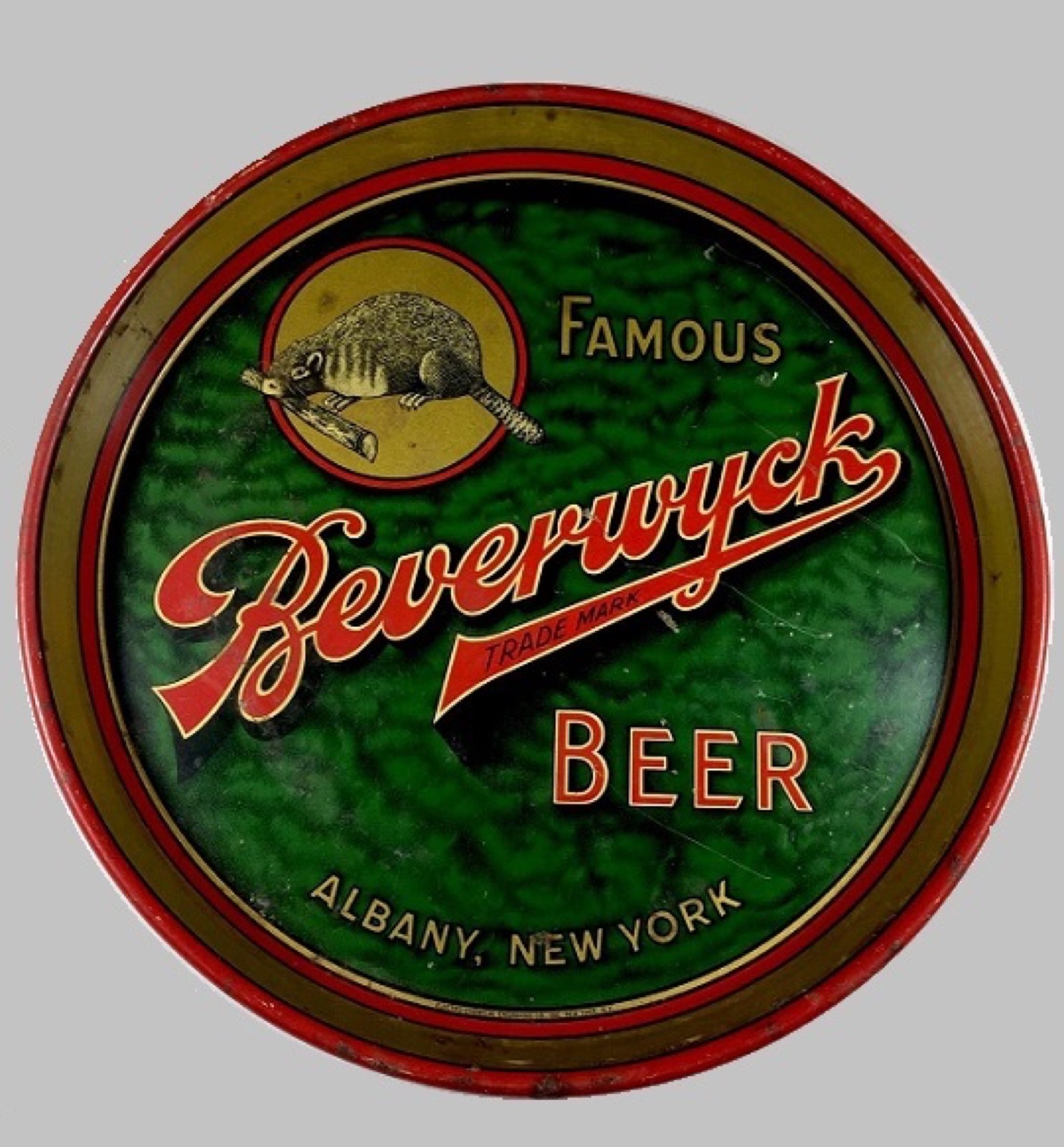
- Beverwyck, on North Ferry Street, was the giant. It reopened as Beverwyck Breweries, Inc., and by October 1933 it was advertising across the region. Solid1
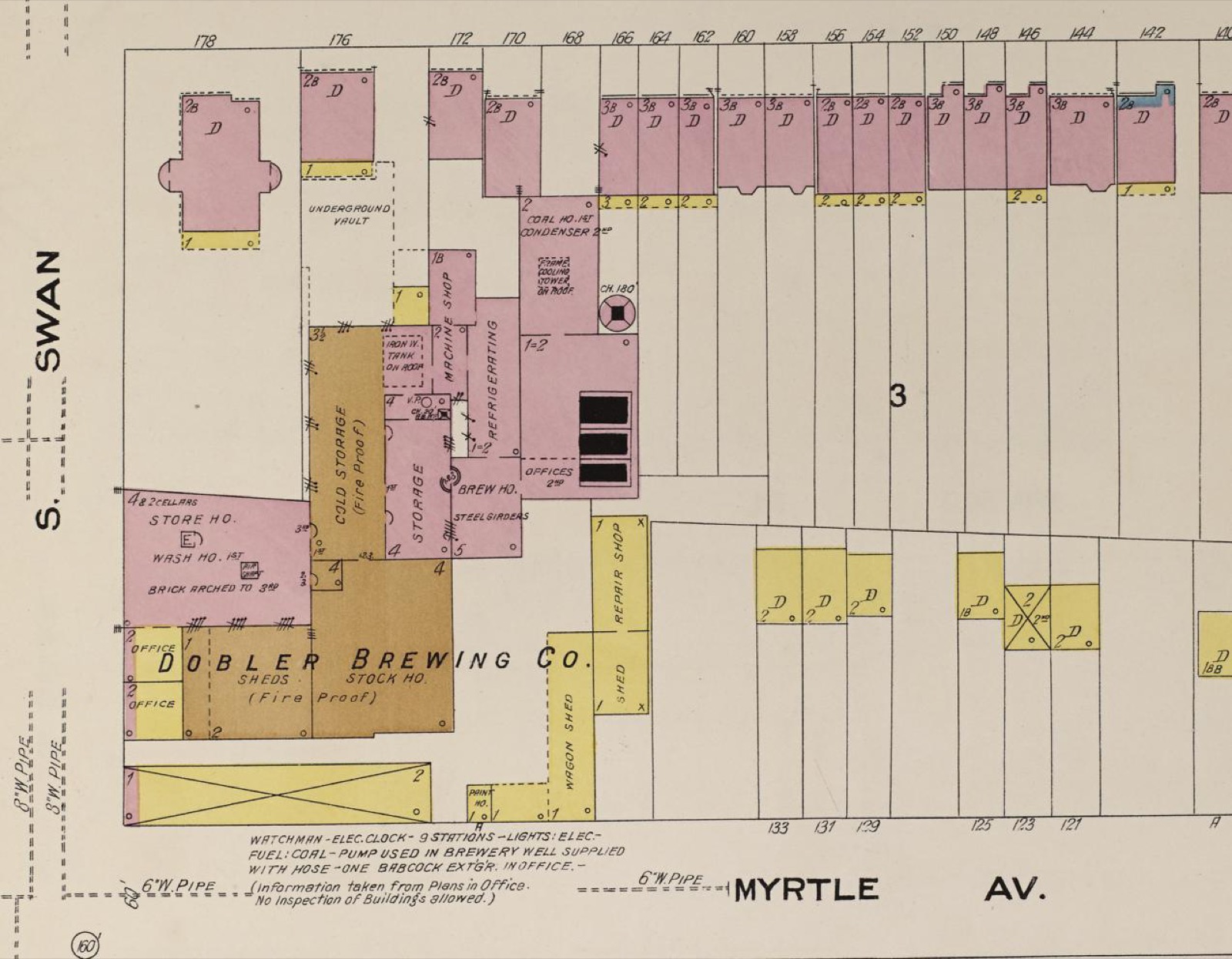
- Dobler, on South Swan Street at Myrtle Avenue, belonged to the Feigenspan brewing family of Newark. Solid2
- Hedrick, at 400–410 Central Avenue, belonged, in whole or in part, to the O'Connell brothers, who ran the Albany Democratic machine. Solid3
One encyclopedia says four Albany breweries reopened, not three, but it doesn't name the fourth, and every brewery list we've checked shows three. Disputed
Two of these were ordinary businesses. They advertised, hired salesmen and fought for customers. The third didn't need to. For thirty-two years the beer from Central Avenue was the drink of a political organization. It turned up on the taps of bars that wanted to keep their licences and at the clambakes of groups that wanted to keep their friends, and long after it stopped being brewed in Albany it was still the beer people remembered being made to sell. Inference
Here are the three breweries side by side. A solid bar means beer was being brewed in Albany. A hatched bar means only the name carried on, brewed somewhere else. Click a dot for the event.
Three breweries after Repeal, 1933–1990
Beverwyck came out of the dry years with the most ambition. It brought back six products: an India Ale and a Porter, made until 1944, and an Ale, a Bock, a Beer and an Irish Cream Ale, made until 1950. Single source4 The old Quinn & Nolan ale brewery across the street was combined with the lager plant, so one company now made both ale and lager. Single source5 Gravina writes that the Quinn & Nolan building came down and a modern L-shaped building went up in its place. Single source2 Its ads helpfully told out-of-towners to say it "BEAVERwick." Single source6
It also moved fast on the new technology. Canned beer had only gone on sale nationally in 1935, and by December 1935 Beverwyck was running a seven-week ad campaign for its canned beer and ales in New York, all six New England states, the Carolinas and Georgia. Solid7 That made it one of the early canners. Inference Its beer reached Rochester, New York City, Boston and the Canadian border, Single source and Boston papers were carrying ads for its Irish Brand Cream Ale in 1941. Solid8 A new bottling plant and office went up in 1939, Single source9 and its rated capacity climbed from 250,000 barrels in 1937 to 300,000 in 1939. Single source10 Those are capacities, not output. No yearly output for any Albany brewery in these decades has been found. Solid
The brothers' brewery
The O'Connells were four brothers from the South End, sons of a saloon keeper. Solid11 The historian Frank Robinson writes that their father, John O'Connell Sr., kept a saloon where the boys tended bar, and that the saloon's place at the center of neighborhood life pulled saloonkeepers into politics. Single source12 From the early 1920s the brothers ran the Albany County Democratic organization, Single source and they had a brewery soon after beer came back.
- Daniel P. "Dan" O'Connell (1885–1977) was the boss. Solid13
- Edward J. "Ed" O'Connell, the lawyer and county chairman, was the public face. Robinson says that besides his law practice and the family's radio and television stations, Ed oversaw the family brewery. He died in 1939. Single source12
- John J. "Solly" O'Connell was the one brother who stayed out of politics and was, Robinson says, actually a Republican. He had gambling interests, raised fighting cocks, collected a long arrest record without a conviction, and died in 1953. Single source
- Patrick H. "Packy" O'Connell, the First Ward leader, died in 1933, Single source14 so he can have had little to do with the brewery after Repeal. Inference
Within three months of legal beer, the family's name was in national headlines. In July 1933 Solly's son, John J. "Butch" O'Connell Jr., aged 24, was kidnapped. Solid TIME reported the $250,000 demand and said Butch had been running beer distribution for Hedrick, which his uncles partly owned. Single source3 The family is said to have paid $40,000 to get him back. Single source12 Some later accounts put the kidnapping in 1931 or 1934; July 1933 is correct. Solid
The kidnapping and the brewery: a legend
Robinson passes on a story he heard from someone close to the kidnappers. On this account, the men who killed Legs Diamond in 1931 had been promised a share of the O'Connells' Hedrick brewery. When the O'Connells wouldn't pay up, Butch's kidnapping was staged to collect the debt. Single source12 In 1944 the Chicago Tribune, no friend of any Democrat, repeated the rumor that the abduction was over an old Prohibition-era debt. Single source14
It's a good story. It ties Hedrick to both of the era's famous crimes, which is exactly why it should be handled carefully. Robinson himself offers it as hearsay, and nothing else supports it. Disputed
How did the O'Connells get Hedrick?
Nobody has yet found a deed, a stock register or a corporate filing that shows how the brewery passed to the O'Connells. What survives is three competing stories, a handful of titles, and a few dates. Solid
Before Prohibition, Hedrick was a family lager house, incorporated in 1891 and run by William Hedrick. Solid15 By the 1910s and early 1920s its president was Robert Weigel, a Berlin-born former German navy man who also headed the United States Brewmasters Association. Single source16 In November 1922 Variety reported that beer seized from the Hedrick plant, "which was raided by federal agents under Chief C. J. Fennessey on Sept. 18," was to be returned to its owners by order of the federal court. Single source17 That was the plant's second federal raid in under two years. Inference
Step through the accounts:
Who owned Hedrick, and since when?
The accounts may not really conflict. The apple-and-malt drink turns up in both Bailey and Gravina, which suggests they're drawing on the same 1920s newspaper report. Inference A likely reading is that the O'Connells had a stake during Prohibition, through loans or a front man such as John J. Conway, and took open, full ownership around Repeal. The "purchase" of 1933 would then be the last step, not the first. Inference The NYS Department of State's corporation records, the federal court file from the 1920s prosecution, or Conway's papers could settle it. Inference
Titles are firmer than origins. Four sources, each close to its date, say who held which job:
| Year | Who held what at Hedrick | Source | Confidence |
|---|---|---|---|
| July 1933 | Part-owned by Dan and Ed; nephew Butch runs beer distribution | TIME | Single source |
| 1938 | Ed president, Dan vice president, John Jr. general manager | Dewey's radio speech | Single source |
| 1944 | Dan president, his nephew John general manager | Chicago Tribune | Single source |
| 1953 | Frank W. Dunham, a company official, registers the Still the Best label | Catalog of Copyright Entries | Solid |
| 1960–64 | Joseph J. Munninger, brewmaster | Federal court notices; his 1963 report | Solid |
| 1963 | Dan takes no salary; a "John J. O'Connell Jr." is the best-paid employee, at $10,000 | Grondahl, from the 1963 report | Disputed |
The last row is a puzzle. Robinson says Butch left the county chairmanship in 1945, went to work at the brewery and died in 1954, aged 45. Single source12 So either the John J. O'Connell Jr. on the 1963 payroll was a different John, or one of the two sources is wrong. Disputed18
A name that wasn't Hedrick's
Some collector sites list Hedrick as "aka Regional Brewing Co.," and it has been suggested that the alias hid the O'Connells' ownership. The older brewery reference lists Regional Brewing Co. (1964–68) as one of the trade names used by Piels at its Willimansett, Massachusetts, plant, not as Hedrick's name in Albany. Disputed19 Unless an Albany document turns up showing "Regional Brewing" in use, the hidden-owner idea should be dropped. Inference
"Or else": Dewey on the radio
The charge that Albany's bars had to sell the machine's beer is usually dated to the 1940s. In fact it was made in full, with numbers, documents and names, on a Monday evening in October 1938. Solid
At 6:30 p.m. on 24 October 1938, Thomas E. Dewey, Manhattan's racket-busting district attorney and the Republican candidate for governor, went on the air from WJZ over NBC's statewide network for fifteen minutes. His subject was Albany. The Kingston Daily Freeman printed the speech almost in full the next day, Solid20 and the Christian Science Monitor and Chicago Daily Tribune summarized it the same morning. Solid2122 Dewey later reprinted it in his memoir. Single source23 A 1943 dry polemic misdates it to 1939; 1938 is right. Solid24
Here is what he told the state, in summary:
- Three brothers had run Albany County for sixteen years: Ed, the lawyer and front man; Dan; and Solly, whom he called a man in the shadows. The brewery was one of the family's businesses. Ed was its president, Dan its vice president, and Solly's son John its general manager. Single source20
- A brewery with no salesmen. Other breweries selling in O'Connell territory employed between 15 and 34 licensed salesmen each. Hedrick employed none. It didn't need them, because in Albany the barrooms sold Hedrick's beer, "or else." Single source
- The count. Hedrick's, Dewey said, was the only beer on draft in the city's two largest hotels and in 200 of the 259 bars and grills in Albany. Single source21
- The reward. A tavern keeper who went all the way with Hedrick's could do almost anything: his licence renewed without trouble, slot machines, hostesses, music and dancing, no fuss over technical rules, and permission to stay open all night. Single source
Dewey's numbers: Albany's 259 bars and grills, October 1938
Each square is one bar. Press the button to fill in the ones Dewey said poured nothing but Hedrick's on draft.
Then Dewey turned to the people who had said no. He said he held affidavits from tavern keepers. Single source20
One man dropped Hedrick's because his customers wouldn't drink it, and in his first week sold four times as much beer. Then the city police and the state's Alcoholic Beverage Control inspectors descended on his tavern day and night. They went through his icebox, his closets and his books. He was ordered to close at 1 a.m. while the Hedrick places down the street stayed open all night. When his licence came up for renewal it was refused, over a door that had been in place for years without anyone objecting. He was told that if he sold only Hedrick's, everything would be smoothed out. He got his licence back six weeks late, after six weeks of selling no beer at all, and by then his trade was gone. Single source
A second man was told by a Hedrick agent that he might lose money on Hedrick's, but he could make it back on slot machines. Single source And one, a tavern keeper in Cohoes, fought back. His sworn affidavit, Dewey said, was in the files of the State Liquor Authority, and in it he quoted a Hedrick agent boasting that his people controlled both the courts and the board. Single source Pouring Hedrick's alongside one other beer, or selling a five-cent glass, was enough, Dewey said, to bring out every rule in the book. Single source
Dewey was a candidate, and this was a campaign speech. Inference But the speech is specific: it names documents, including one that should still exist. The Cohoes affidavit would sit in the State Liquor Authority's 1938 files at the New York State Archives, or in the Dewey Papers at the University of Rochester. Nobody has yet gone to look. Inference
1938 or 1944?
Paul Grondahl's 2026 Times Union article credits the 200-of-259 figure to "a 1944 survey." The numbers are identical to Dewey's, so the figure very likely goes back to the 1938 speech, with the date drifting in the retelling. Disputed18
The brewery's tax bill pointed the same way. Robinson writes that in 1938 the assessment on the O'Connells' Hedrick brewery was cut in half while a rival Albany brewery's was raised. Single source12 Ernest Gordon, writing in 1943, also says Hedrick was assessed at half what other brewers paid, though he may have taken that from Dewey. Single source24 Robinson doesn't name the rival; it could only have been Beverwyck or Dobler. Inference
Wartime: TIME and the troop cans
By 1943 Dewey was governor, and he went after Albany with the machinery of the state. Solid Reporting on the fight on 1 November 1943, TIME repeated the Republicans' charge that Albany's saloons ran all night selling Hedrick beer, made by the O'Connell family. Solid25 The beer had become shorthand for the whole machine. Inference
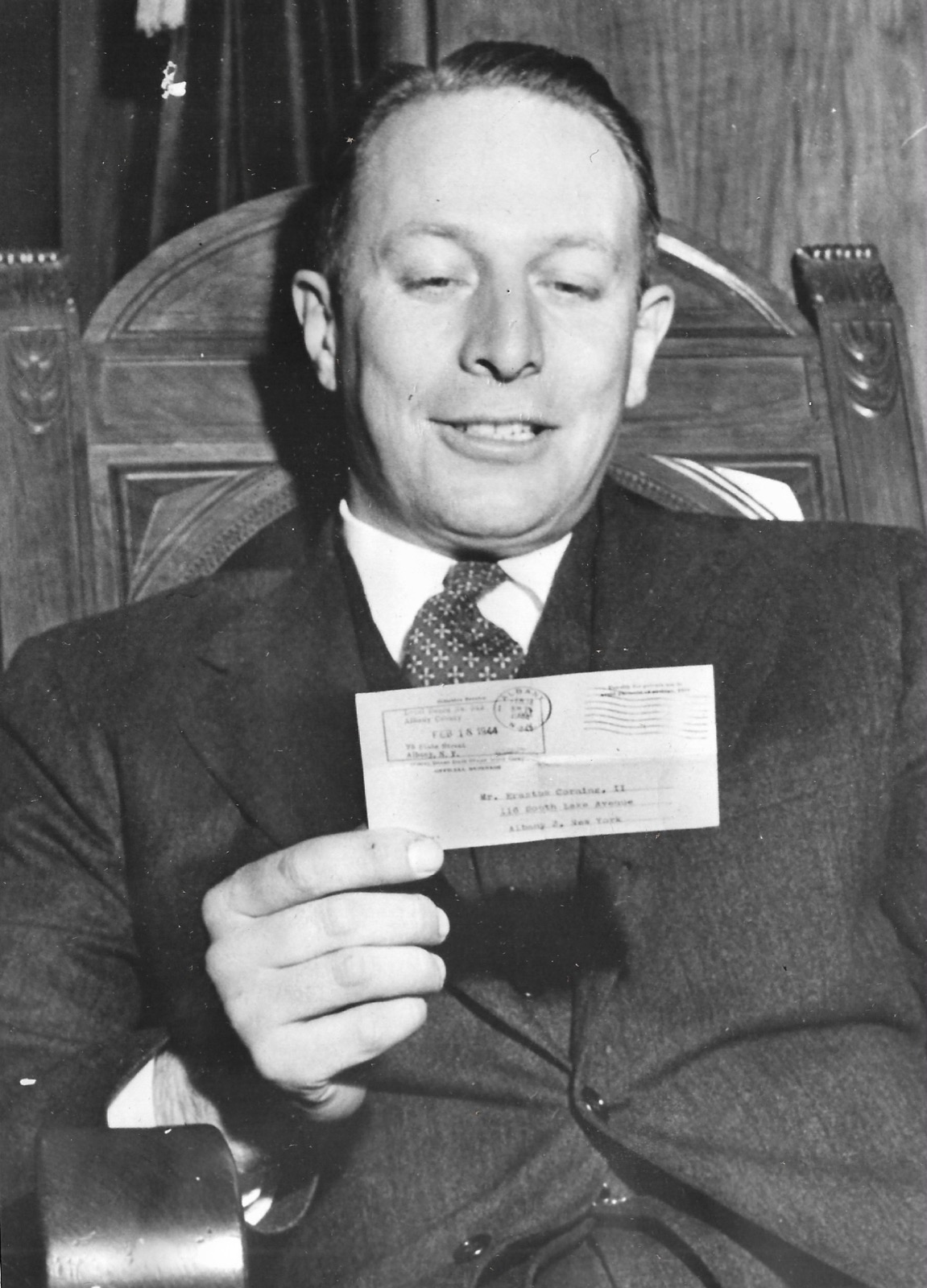
In February 1944 Albany's young mayor, Erastus Corning 2nd, a machine man, was drafted into the army in the middle of the governor's investigations. Single source
Outsiders who came to look were often less shocked than Dewey wanted them to be. In May 1944 I. F. Stone reported from Albany for The Nation and found the machine united and vigorous. Its crimes, he judged, were mostly the kind that wouldn't alarm an ordinary Albanian: open bookmaking, plenty of slot machines, and saloons open all night selling what he called the O'Connell family brew. Solid11 That November the Chicago Tribune was harsher. It wrote that the family's income came from the brewery, which supplied Albany's taverns on a Hedrick's-or-else basis, and named Dan as Hedrick's president and his nephew as general manager. Single source14 No Hedrick-specific finding has turned up in the records of the 1943–44 investigations, which concentrated on tax assessments, bookkeeping and election fraud. Single source
Meanwhile Albany's biggest brewery went to war. Beverwyck spent 1943 running full-page newspaper ads about wartime duty that didn't mention beer at all, just its signature. Solid26 In 1944, when steel for cans was released again, it was one of about 40 breweries chosen to can beer for troops overseas. Single source Gravina writes that the cans were olive drab and probably went to Hawaii and the central Pacific, where New York's National Guard division, the 27th Infantry, was fighting. Single source24 So some Albany beer of the 1940s was being drunk on Pacific islands, and some was being poured after hours in the Gut on the machine's terms. Inference
After the war Beverwyck expanded again, with a streamlined bottling plant and stock house that nearly doubled its capacity. Single source Its brands were Golden Dry Beer and Irish Cream Ale, sold under the slogan "Cream of the brews," and in 1948 it registered a series of joke beer cards titled "Put a head on it!", featuring a burglar, a cannibal and a chef. Single source2728
"It's Hedrick's or the door"
What did this look like from a barstool? The best evidence is memory, and the memories agree with each other to a remarkable degree. Solid
Much of it centered on Green Street and the blocks around it, the downtown district Albanians called the Gut. Robinson describes it as packed with brothels, gin mills and honky-tonks, tolerated on the theory that vice kept in one place stayed away from respectable people. Single source12 Catholic pressure closed the most blatant places in the 1940s, and the whole district was torn down in the 1960s for the South Mall, now the Empire State Plaza. Single source
In the early 1950s the Times Union's Marv Cermak and three other college students went into a protected all-night club on Green Street and ordered Budweisers. The waiter's answer gives this chapter its title: "It's Hedrick's or the door." Oral history29
"It's Hedrick's or the door."A waiter at a Green Street club, early 1950s, as remembered by Marv Cermak
Others remember the same rules. The reporter Jack Germond, who covered Albany in the 1950s, recalled that at closing time in the bars of the Gut a shade came down over the front window, and everyone who stayed to drink illegally had to drink Hedrick's. The bars closed on time only on Saturday nights. Oral history30 The novelist William Kennedy remembered 1930s Albany as wide open, with bars running around the clock, and said they could stay open after hours because they took Hedrick's, Dan O'Connell's beer. Oral history31 A capital-district guidebook simply calls it Albany's political beer. Single source32
Robinson, writing while the machine was still in power, set out the system plainly. A saloon that sold only Hedrick's got everything: round-the-clock hours, no trouble with its licence, and a share of the O'Connell slot machines. A saloon that sold Hedrick's plus one other beer might do even better, since the courts wouldn't help the rival brewer collect an unpaid bill. Most saloonkeepers knew whose beer Hedrick's was and fell into line without being asked. Those who didn't were closed at the curfew while their competitors stayed open, or found themselves cited under the sanitary code. Single source12 He also records stories of rough stuff, heads knocked and rival beer poured into the gutter, but presents them only as stories. Single source
One bar family's voice sounds more measured. Bruce Levitch's father owned several bars, among them Sad Sam's on Sheridan Avenue, across from the old Times Union building, where police officers, postal workers, pressmen, reporters and politicians drank side by side. His son remembers that carrying Hedrick's wasn't strictly required, but it was smart if you wanted a liquor licence in Albany County. His father poured Hedrick's, Schaefer and Ballantine. Oral history33 That is Robinson's two-beer bar, with one of the two Hedrick's, seen from behind the counter. Inference Gravina passes on the local saying in its bluntest form: if you didn't sell Hedrick, you didn't have a bar. Oral history2
Put together, the evidence works on three levels: a campaign speech that cites sworn affidavits (1938); historians' summaries (Robinson in 1973, Gravina in 2014); and first-hand memories running from the 1930s into the 1960s. The mechanism, meaning police and inspector harassment, slow licence renewals, selective curfews and friendly assessments, is a consistent charge across all of them. Solid No court ever ruled on it, and the one affidavit known to have been filed has not been seen. Any single case remains one person's word. Single source
Five kegs, Uncle Joe and the bung man
The beer had to reach the bars somehow, and the people who delivered it have left the most vivid memories of all.
John J. Oliver, a friend of Dan O'Connell's, was by Grondahl's account the biggest distributor of Hedrick's. Single source18 His son, the memoirist John Oliver, drove one of his father's beer trucks as a teenager and has written about it. In his telling, the business was tiny, a fleet of two trucks. Oral history34 Both can be true if Hedrick's distribution was split among many small operators. Inference
The famous story is his. A driver would tell a bar owner he was leaving five kegs this week. The owner would say he only needed two. The driver left five, and the extra three went down to the cellar. Oral history3518
So is the family's oldest Hedrick memory. Oliver's Uncle Joe Kennah was a favorite of Dan O'Connell's, and starting in December 1933 he was allowed to sell Hedrick's to bars and restaurants across Albany County. Oliver adds that his uncle's bad behavior nearly got him killed; the rest of that story is behind a paywall. Oral history35
Corrected attribution
Earlier versions of this research, including our own local notes, credited the five-kegs story and "Uncle Joe Kennah" to Marv Cermak. Both belong to John Oliver. Cermak's column has only the Green Street "Hedrick's or the door" story and his memories of what was on tap. Solid
And then there is the bung man. When Oliver was about five he visited the brewery on Central Avenue, a red-brick building he remembers as looking like a Victorian prison. There he met a man whose whole working life had been hammering wooden bungs into filled kegs. His right arm, the hammer arm, had grown enormous; his left was normal. Oral history3418 If Oliver was born around 1954, that visit would have been about 1959. Approximate
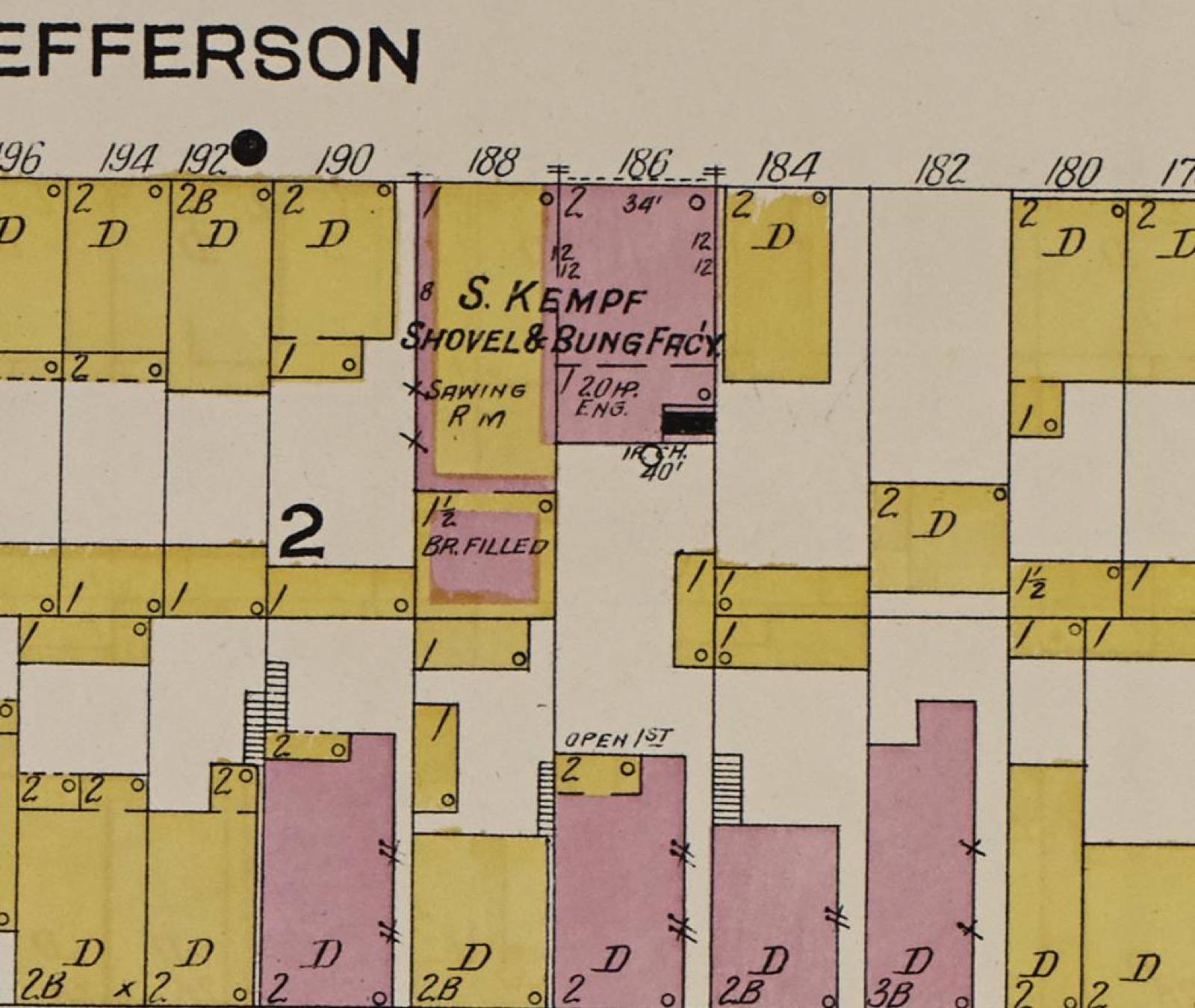
This website lives in the building that made those bungs. Stephen Kampf's shop at 186 Jefferson Street turned out wooden bungs for Albany's breweries from the 1870s and was still listed as a bung factory in 1946 and on a fire map corrected to 1950. Solid Nobody has yet shown that Hedrick bought its bungs from Kampf. The timing fits, since Kampf was still making bungs around 1950 and Hedrick's bung man was still hammering them in a decade later, but no invoice or ledger links the two. Inference The Bung Factory page tells the story of the house.
Still the Best?
Hedrick made a lager and a cream ale. Single source18 On 7 April 1953 the company registered its label, "Hedrick lager beer. Still the best," for copyright, with a company official, Frank W. Dunham, named as author. Solid36 (Horlacher of Allentown used the same slogan.) Single source37 It came in brown quart bottles, kegs and cans; the Albany Institute owns a 1960 six-pack of red-and-gold aluminum cans. Solid38
Almost no one remembers it fondly. People who drank it call it gassy, skunky and good for a headache. Kennedy, quoted by Grondahl, said it tasted as though it had been left out in the yard overnight. Oral history18 A 1984 beer guide that tasted the later, out-of-town Hedrick Lager was kinder but hardly excited: cloudy tawny gold, a faint malt aroma, a light grainy flavor and not much finish. Single source39
The beer's real job was political, and much of it was given away. From the brewmaster's 1963 report and from interviews, Grondahl found that Hedrick handed out dozens of free kegs and hundreds of cases a year: to bowling leagues, fraternal lodges, gun clubs and clambakes, to churches, and to nuns and priests. Its ads were everywhere, on bowling shirts, in Knights of Columbus and Lions Club programs, in Catholic bulletins and on synagogue notice boards, on St. Patrick's Day fliers, Twilight League schedules, union calendars and school yearbooks, and even on Albany Republican Committee fliers. Dan reportedly called the free beer "honest graft." Single source18 Independent traces back him up: a Hedrick Brewing Co. bowling team in 1950, Solid40 a full page of compliments from the Hedrick Brewing Company in the 1955 Christian Brothers Academy yearbook, Solid41 and in 1936 a Hedricks team in Kingston's City League, with a case of beer offered for a home run. Solid42 The retired county clerk Tom Clingan told Grondahl the payroll was full of politically connected families, and that Dan cared about the brewery only for what its money could do politically. Oral history Robinson says Dan himself wasn't much of a drinker, but he liked beer and preferred the people around him to drink it rather than hard liquor. Single source12
That doesn't mean Hedrick was small. Gravina calls it the smallest of the three post-Repeal breweries, well behind Dobler. Single source2 But sales tables filed in a 1960s federal antitrust case against Pabst put Hedrick at roughly 90,000 barrels in 1958, about one-ninth of one percent of all American beer and roughly level with Dobler. Approximate43 A later antitrust case, against Falstaff, records Hedrick's normal yearly capacity in 1965 as 150,000 barrels. Single source44 Someone had been investing in the plant. Grondahl's joke that the brewery gave away more than it sold is just that, a joke. Inference
| Year | Hedrick figure | Measure | Confidence |
|---|---|---|---|
| 1901 | 8,000 barrels | sales (pre-Prohibition, for scale) | Single source |
| 1939 | 50,000 barrels | capacity | Single source |
| 1958 | about 88,000–92,000 barrels (the scan drops a digit; its rank fixes the range) | sales | Approximate |
| 1963 | the worst year since operations began in 1933; a large loss | finances | Single source |
| 1965 | 150,000 barrels | capacity | Single source |
The 1901 figure is from One Hundred Years of Brewing (1903); 1939 from Tavern Trove; 1958 from the Pabst record; 1963 from the brewmaster's report, via Grondahl; 1965 from the Falstaff record. 45
Dobler's quiet exit
While Hedrick had the politics, Dobler had the out-of-town owners. Christian Feigenspan, Inc. of Newark had bought the brewery around 1908 and kept it going through Prohibition on near-beer and soda. Solid46 After Repeal it brewed what was essentially Feigenspan's beer and borrowed the Newark firm's famous initials, P.O.N., turning "Pride of Newark" into "Pride of the Nation." Single source2 When Ballantine bought the Newark brewery in the early 1940s, Dobler was left out of the deal and stayed with the Feigenspan family under Edwin Feigenspan. Single source
It sold well beyond Albany. From 1947 to 1953 it ran its own branch on Bruyn Avenue in Kingston, Solid47 and Hudson's directories list a Dobler depot there. Solid48 In 1958 its sales were a little over 92,000 barrels, just above Hedrick's. Approximate43
Then it was gone, quietly. In April 1959, with 125 employees, Dobler was sold to Hampden-Harvard of Willimansett, Massachusetts, Single source49 and the Albany plant closed around 1960. Single source50 The sources give 1959 for the sale and 1959 or 1960 for the closing, and one says the Dobler name passed to Hampden-Harvard only in 1968. Those dates can all be true together: a sale, a closing, and a later brand transfer. Disputed51 By 1965 Hampden-Harvard was itself a division of Piels, with a 400,000-barrel plant, Single source44 so both of Albany's smaller post-Repeal brands, Dobler and Hedrick, ended up at the same Massachusetts brewery. Inference
The main building came down in 1960, according to one account; Gravina says it was demolished in the early 1960s to make room for apartments connected with the Empire State Plaza project. Disputed The carriage house, which stabled eighteen delivery horses, is said to survive. Single source52
Which building is which on Myrtle Avenue?
Some maps of Albany's breweries, including an early draft of ours, put Dobler at 160 Myrtle Avenue, the HudsonPark apartments. OpenStreetMap labels that address the "Hinckel Brewery Bottling Plant," inside the Hinckel Brewery Apartments, which places it on the Hinckel block, not Dobler's. Single source The old directories put Dobler at "S. Swan cor. Myrtle av.," and the 1934 fire map numbers it 187 South Swan Street. Solid Street numbers on Myrtle have changed since the 1890s, so the city assessor is the final word, but the two breweries should not be merged. Inference
Rats, a briefcase and Piels
The only court judgments ever found against Hedrick have nothing to do with bars. They are about bugs.
On 2 November 1960 federal food inspectors seized grain at the brewery: 126 hundred-pound bags of cracked wheat shipped from Chicago in May, and 30,000 to 40,000 pounds of barley malt shipped that summer from Manitowoc, Wisconsin, and Toronto. The charge was that the grain held insects, that the malt held rodent droppings, and that it had been stored in insanitary conditions. Nobody contested it, and the grain was ordered destroyed that December. Solid53 The cracked wheat suggests Hedrick used wheat in its mash alongside barley malt. Inference
On 5 March 1962 the government followed up with a criminal charge against Hedrick Brewing Co., Inc. and its brewmaster, Joseph J. Munninger, personally, for keeping the grain in a building open to insects and rodents. Both pleaded guilty, and each was fined $125. Solid54 The machine could protect a bar from a county inspector, but its protection stopped at the federal courthouse. Inference
Two years later Munninger wrote the brewery's epitaph. His report on 1963, dated January 1964, survived because a retired county clerk, Tom Clingan, found it in a secondhand briefcase and copied it. It describes falling sales, worn-out and expensive equipment, a heavy loss, and the worst year since operations began in 1933, and it ends with a promise to try to hold things together as well as possible. Dan O'Connell drew no salary that year. Single source18 The original is not public; the Albany County Hall of Records declined to buy it. Single source
In 1965 Hedrick sold out to Piels, the Brooklyn brewer, owned since 1963 by Associated Brewing, and ended all operations in Albany. Piels took over making Hedrick's lager and ale under a licence. Solid182 Four independent sources now confirm the Piels takeover, which earlier research couldn't. Solid A few sources put the closing in 1963 or 1966, but the 1965 date is the best supported, and a federal water-pollution survey of June 1967 struck Hedrick from its list because it had gone out of business. Solid55 The red-brick brewery was torn down, and the Central Towers apartment building now stands at 400 Central Avenue, the old brewery's address. Solid56 When the demolition happened is not yet known. Single source
The name didn't die with the building. Piels brewed Hedrick at its Willimansett plant through the late 1960s, Single source39 and Hedrick cans are known from Albany (1963), Willimansett (late 1960s) and Hammonton, New Jersey (1973). Single source57 In 1974 the brand went to Eastern Brewing of Hammonton, which made it until that brewery closed in 1990. Single source2 A 1987 trade-names dictionary still lists HEDRICK beer next to Piels and Hampden. Solid58 The machine's beer outlived the machine's brewery by twenty-five years. Solid
Pat's memory
This chapter has a family witness. Gwen, whose house is the old bung factory, has a stepfather, Pat, now about eighty. He remembers that when he was a young man in Albany, if you owned a bar you had to carry the beer made by the machine's brewery. Gwen half-remembered the story as beer "made by the mayor or something," and as lasting into the 1970s. Oral history
How does the memory fit the record? When this research began, it seemed to have a dating problem. Pat would have turned 18, then New York's drinking age, Solid59 around 1964, and the brewery on Central Avenue closed in 1965, when he was about nineteen. Approximate A memory of the 1970s couldn't be about beer brewed in Albany. Solid
The newer research changes that. The Hedrick brand was on sale until 1990, so a bartender in the late 1960s or the 1970s could still have been pouring something called Hedrick's. Solid The machine itself lasted until Dan O'Connell's death in 1977, and the pressure on bar owners was never only about one brand. Levitch's father carried Hedrick's next to Schaefer and Ballantine; what mattered was staying in good standing. Oral history Whether Hedrick's was still being poured in Albany bars in the 1970s, and whether any bar pressure continued after the brewery left town, nobody has yet documented. Single source And "made by the mayor" is an easy slip to make: Mayor Corning was the machine's public face for four decades, and the brewery belonged to the men behind him. Inference
He remembers what every Albany barkeep knew: you poured the machine's beer. The brewery on Central Avenue closed just as he came of age, but the name on the tap handle outlasted the building by a quarter century.
If you remember Hedrick's on tap in Albany, before or after 1965, we'd like to hear from you.
Schaefer's Albany and the empty decade
Beverwyck, the biggest of the three, went first to outsiders. In 1950 F. & M. Schaefer of Brooklyn, whose New York plant was running over capacity, bought the North Ferry Street brewery. Solid24 A trade journal at the time reported a rated capacity of 600,000 barrels and said Beverwyck's sales hadn't kept up with rising costs. Single source60 For a while Schaefer kept brewing Irish Cream Ale in Albany, and a "Schaefer Irish Cream Ale, Albany" can survives from about 1955; then it dropped the brand, the last trace of Beverwyck. Single source5 Schaefer as a company sold nearly 3 million barrels in 1957–58, about seventh in the country, Approximate43 and Gravina writes that it renovated and enlarged the Albany plant between 1958 and 1966 and added a canning line in 1970. Single source
Schaefer, not Hedrick, was what most of the region actually drank. Cermak recalls hardly a pub in the Tri-City area without Schaefer on tap, helped along by its jingle about the one beer to have when you're having more than one. Utica Club was nearly as common; Budweiser and Schlitz mostly came in pricier bottles. Oral history29 His column's headline puts it neatly: Hedrick's, not Schaefer, only in some spots, the protected ones. Inference One reader's father drank Schaefer every night, mostly at the Elks Club, and named his dog after it. Oral history33
In 1972 Schaefer opened a big new brewery in Pennsylvania's Lehigh Valley, and that left it with more capacity than it needed. The old Albany plant was shut as of 31 December 1972. Solid533 For the first time since the Dutch, Albany had no brewery. Solid
The brewery's mascot left town too. The zinc King Gambrinus that Michael Nolan had set over the entrance in 1878 had watched over North Ferry Street for 94 years, through Prohibition and the Schaefer purchase. In 1972 it went to Schaefer's new Lehigh Valley brewery near Allentown. Single source61 That plant later passed to the Boston Beer Company, and the old Albany king now stands, stripped of his paint, on a brick pedestal in its beer garden. Single source62
The building itself refused to go quietly. When the wreckers set off their first charges in 1976, the old brewery lurched slightly and stayed standing. It had to be taken down brick by brick, by hand, over months, and the Times Union covered it at length. Solid233 A few outbuildings survived. Single source
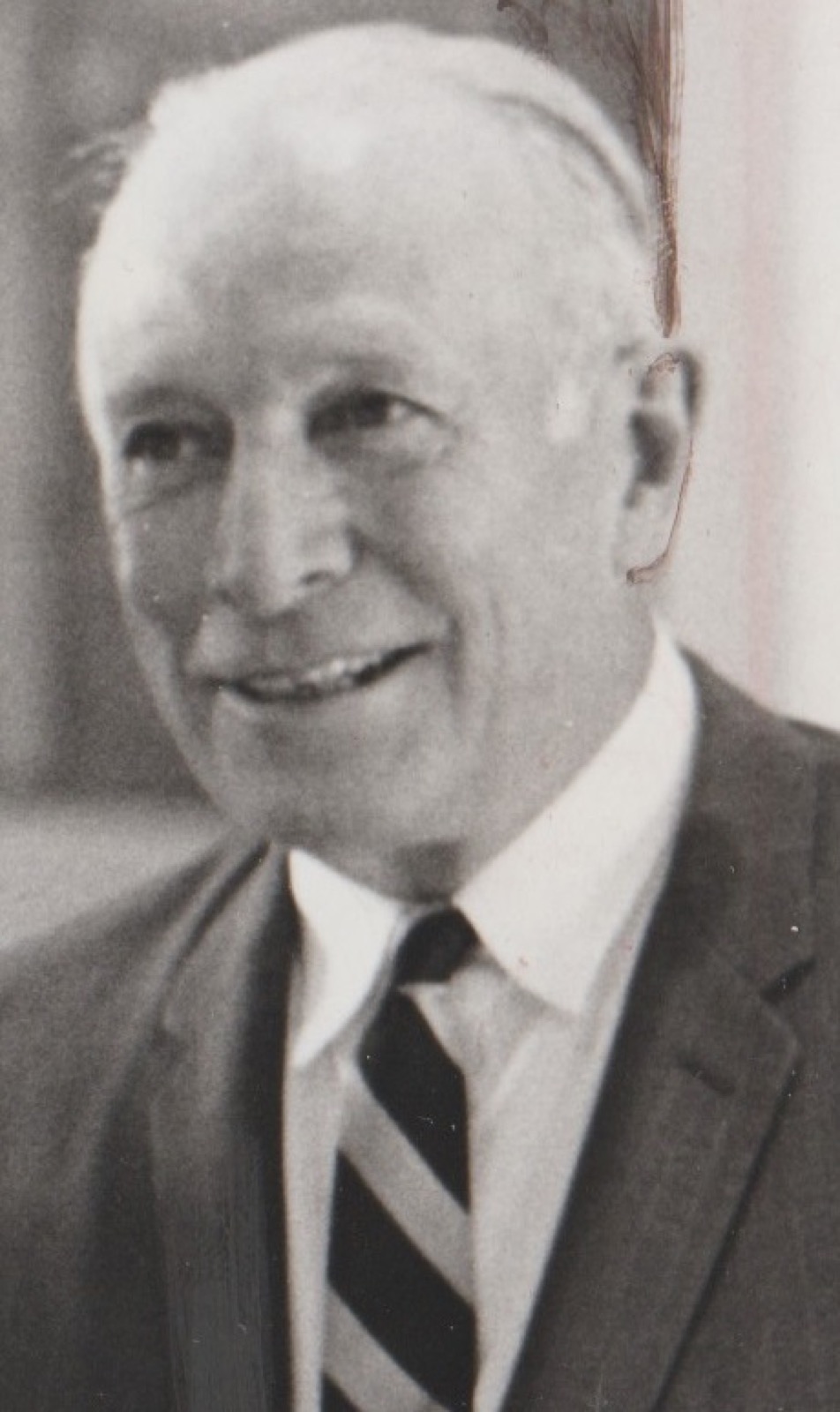
The machine was winding down too. Dan O'Connell died on 28 February 1977, aged 91. Solid13 Erastus Corning, the mayor whose name went on the ballots while the O'Connells ran things, stayed in office until 1983. Single source63 By then the brothers' brewery was an apartment tower and their beer came from New Jersey.
What did Albany drink in the empty years? Schaefer, now trucked in from Pennsylvania and Brooklyn, was the habit of a generation. Utica Club and Matt's came from the Matt brewery in Utica, and Ballantine, Genesee and the national brands, Budweiser, Schlitz and Miller, filled the rest of the taps. Oral history33 In a 1964 antitrust trial, an economist named Anheuser-Busch, Schlitz, Miller, Pabst, Rheingold and Schaefer, plus Narragansett and Ballantine, as the competitors that mattered in New York and New England. Single source44 Hedrick itself was still being brewed in New Jersey; whether Albany bars still poured it is unknown. Single source Gravina calls this the first time in nearly 350 years that the upper Hudson Valley had no brewery, a gap that lasted less than a decade; Solid2 a 1980 reference book confirms that by the mid-1970s no brewery operated in the city. Solid46 Who distributed beer in Albany in those years hasn't been traced. Single source
The gap ended with a man who had never brewed a batch. In 1979 a state budget examiner named Bill Newman raised $250,000 from a local bank and development agencies, trained with Peter Austin at the Ringwood brewery in England, and set up a ten-barrel brewery in the Warehouse District. Single source2 Gravina puts it in a former Schaefer keg-storage building on Learned Street, and a man who once worked there remembers broken Beverwyck crates still lying around. Oral history33 Newman himself has described the building as a mattress factory on Broadway, so the details are disputed. Disputed64 If Gravina is right, Albany's first new brewery opened in a storeroom of its last old one. Inference That story belongs to the next chapter.
Sources for this page
- Kingston Daily Freeman, 27 Oct 1933 archive.org
- Gravina, Upper Hudson Valley Beer (2014) web.archive.org
- TIME, 24 July 1933 time.com
- Wikipedia: Beverwyck Brewery en.wikipedia.org
- The Beer Book (1973) archive.org
- Kingston Daily Freeman, 1937 archive.org
- Printers' Ink, 26 Dec 1935 archive.org
- Boston American, 13 Mar 1941 archive.org
- Iron Age, 12 Oct 1939 archive.org
- Tavern Trove: Beverwyck www.taverntrove.com
- I. F. Stone, The Nation, 20 May 1944 archive.org
- Robinson, Albany's O'Connell Machine (1973) archive.org
- Wikipedia: Daniel P. O'Connell en.wikipedia.org
- Chicago Daily Tribune, 11 Nov 1944 archive.org
- Albany city directory, 1900 archive.org
- History of the Valley of the Hudson (1931), vol. 4 archive.org
- Variety, 10 Nov 1922 archive.org
- Grondahl, Times Union (2026) www.timesunion.com
- Bull, American Breweries (1984) archive.org
- Kingston Daily Freeman, 25 Oct 1938 archive.org
- Christian Science Monitor, 25 Oct 1938 archive.org
- Chicago Daily Tribune, 25 Oct 1938 archive.org
- Dewey, Twenty Against the Underworld (1974) archive.org
- Gordon, The Wrecking of the Eighteenth Amendment (1943) archive.org
- TIME, 1 Nov 1943 time.com
- Advertising Age, 28 Jun 1943 archive.org
- Kingston Daily Freeman, 20 Jul 1948 archive.org
- Copyright Registration Cards 1946–54 archive.org
- Marv Cermak, Times Union, 1 Jul 2014 www.timesunion.com
- Germond, Fat Man in a Middle Seat (1999) archive.org
- Conversations with William Kennedy (1997) archive.org
- The Smalbanac (2010) archive.org
- Times Union reader memories (2026) www.timesunion.com
- John Oliver, "Beer Me, Dude!" (2024) louchelife.substack.com
- John Oliver, "Still the Best" (2023) louchelife.substack.com
- Catalog of Copyright Entries, 1953 archive.org
- Anderson, From Beer to Eternity (1987) archive.org
- Daily Gazette, 6 Apr 2017 www.dailygazette.com
- Robertson, Connoisseur's Guide to Beer (1984) archive.org
- Bowling Magazine, Jan 1950 archive.org
- CBA yearbook, 1955 archive.org
- Kingston Daily Freeman, 8 May 1936 archive.org
- U.S. v. Pabst record, Joint Exhibit JX-36 archive.org
- U.S. v. Falstaff record archive.org
- Tavern Trove: Hedrick www.taverntrove.com
- Downard, Dictionary of the History of the American Brewing and Distilling Industries (1980) archive.org
- Kingston Daily Freeman, 5 Mar 1947 archive.org
- Hudson NY Directory Collection archive.org
- Dreimiller family genealogy: Dobler dreimiller.com
- Wikipedia: Dobler Brewing Company en.wikipedia.org
- Finding Your Past (2013) findingyourpast.blogspot.com
- Albany Walks for Health (archived) web.archive.org
- FDA Notices of Judgment 26969 (Jan 1961) archive.org
- FDA Notices of Judgment 28061 (Jul 1962) archive.org
- FWPCA, Hudson-Mohawk water pollution survey (1967) archive.org
- Central Towers listing www.aplaceformom.com
- Beer Can Collector's Bible (1976) archive.org
- Trade Names Dictionary (1987) archive.org
- Wikipedia: New York State Liquor Authority en.wikipedia.org
- Modern Brewery Age, Sept. 1950, p. 117 (Google Books snippet) www.google.com
- Gravina, "The King Has Left the Building," drinkdrank (2014) web.archive.org
- Wikipedia: King Gambrinus (sculpture) en.wikipedia.org
- Wikimedia Commons: Erastus Corning 2nd commons.wikimedia.org
- Edible Capital District, interview with Bill Newman onlinedigeditions.com