Wheat, Pelts & Wampum
Albany's first two centuries of beer: the patroon's brewer, a brewery inside a fur-trading fort, tapsters at war with the tax man, breweries bought and sold for hundreds of beaver pelts, and a Melville family brewery on Brewer's Street.
A brewery for all New Netherland
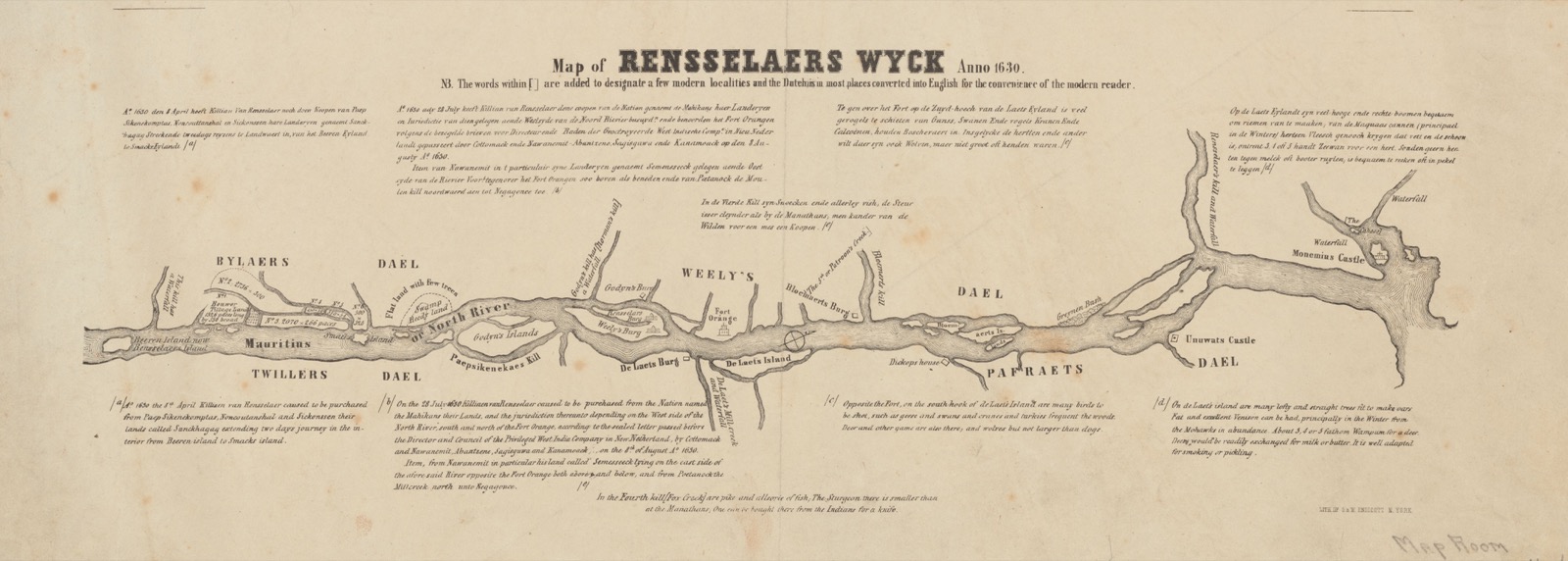
Albany's beer begins with a plan, not a brewer. In June 1632, Kiliaen van Rensselaer, the Amsterdam diamond merchant who owned the vast patroonship of Rensselaerswyck around Fort Orange, wrote to a fellow director of the West India Company: "As soon as there is a supply of grain on hand, I intend to erect a brewery to provide all New Netherland with beer, for which purpose there is already a brew kettle there." Solid1
The first person actually licensed to brew came that same summer. Jacob Albertsz Planck was allowed to take the patroon's share of grain and "brew beer to be sold to the men of the Company or to the savages," the first authorization to brew in the colony. It explicitly allowed sales to Native people, something Stuyvesant's courts would punish ferociously a generation later. Solid12
For years the colonists kept proposing breweries of their own, and the patroon kept saying no. "Respecting milling and beer brewing I intend to make some further regulation," he wrote in 1638, "as one man must not have too much." Solid
Evert Pels, public brewer
On 5 June 1642, in Amsterdam, the patroon signed a six-year licence for Evert Pels van Statijn, from Stettin in Pomerania, "who is well acquainted with brewing." Solid The licence says exactly why Rensselaerswyck needed a public brewer: colonists were brewing beer on the side, which kept them from their real work, "exposes the houses of the patroon to the danger of fire," and let them sell beer "at very extravagant and high prices, to wit, at 20 guilders a barrel." Solid1
Pels sailed that same year on den Houttuyn with his wife and a servant. The ship's manifest lists four large casks holding "two lasts, 11 muddes of malt for brewing for Evert Pels." Solid That works out to very roughly 200–300 bushels. Approximate One thing he didn't bring was a kettle. "Now that there is a public brewer I hope that private brewing will cease," the patroon wrote to the colony's minister, "but as he has not taken a brew kettle with him I do not know what he is going to do." Solid
Corrected date
Many accounts, including the first version of this site, say Pels was hired in 1643. The contract in the patroon's papers is dated 5 June 1642, and he sailed that year.
Wild hops and a brewery monopoly
By 1644 hops were already being gathered locally, and badly. On 31 August the court of Rensselaerswyck banned picking hops before 25 September and ordered that hops already picked "be burned by the officer of this colony, as they are not merchantable hops and cause great fraud by being mixed with others." Solid1 It's Albany's first quality-control law for a brewing ingredient. The words "picked outside" suggest wild hops gathered in the woods. Inference
The colony's brewery was a protected monopoly. In December 1646 the court forbade the farmer Cornelis Segersz to brew "any beer, except so much as shall be required by him for his own housekeeping," because he had "presumed to meddle with what is not his business — with beer brewing — directly contrary to the grant and authorization given to the brewery of this colonie." Solid3 By the late 1640s the patroon charged a duty of one guilder on every barrel brewed in the colony. Solid4
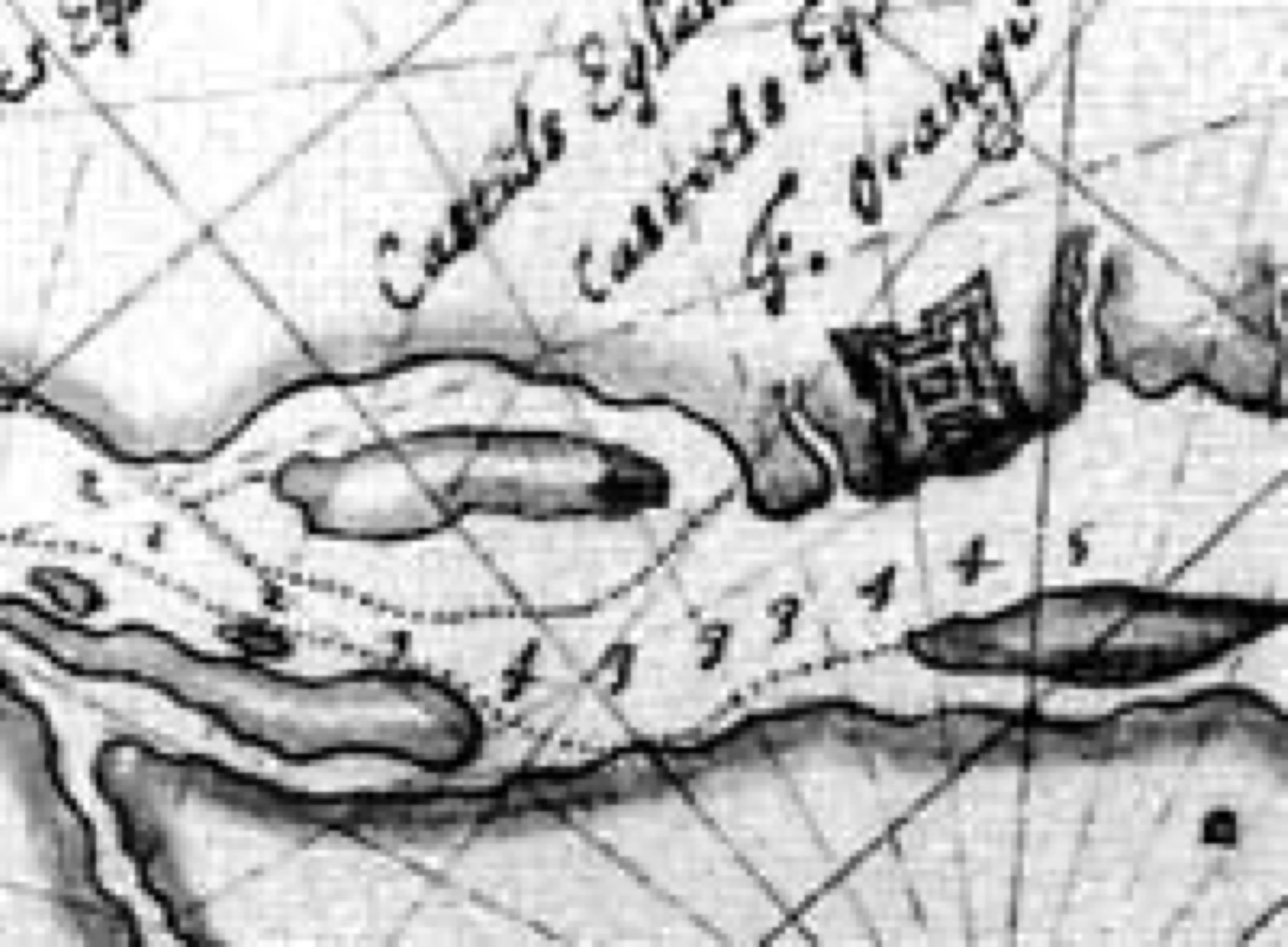
The colony brewery stood in the Greenbush, across the river from the fort. Its court records have the feel of a frontier saloon. In September 1648 its half-owner had a man fire a musket four times in the night "in the brewery," bringing soldiers across the river from the fort; he was also prosecuted for calling the director "an old gray thief and a rascal." In January 1649 a servant drew a knife on another "in the brewery" and was fined 100 guilders. Solid
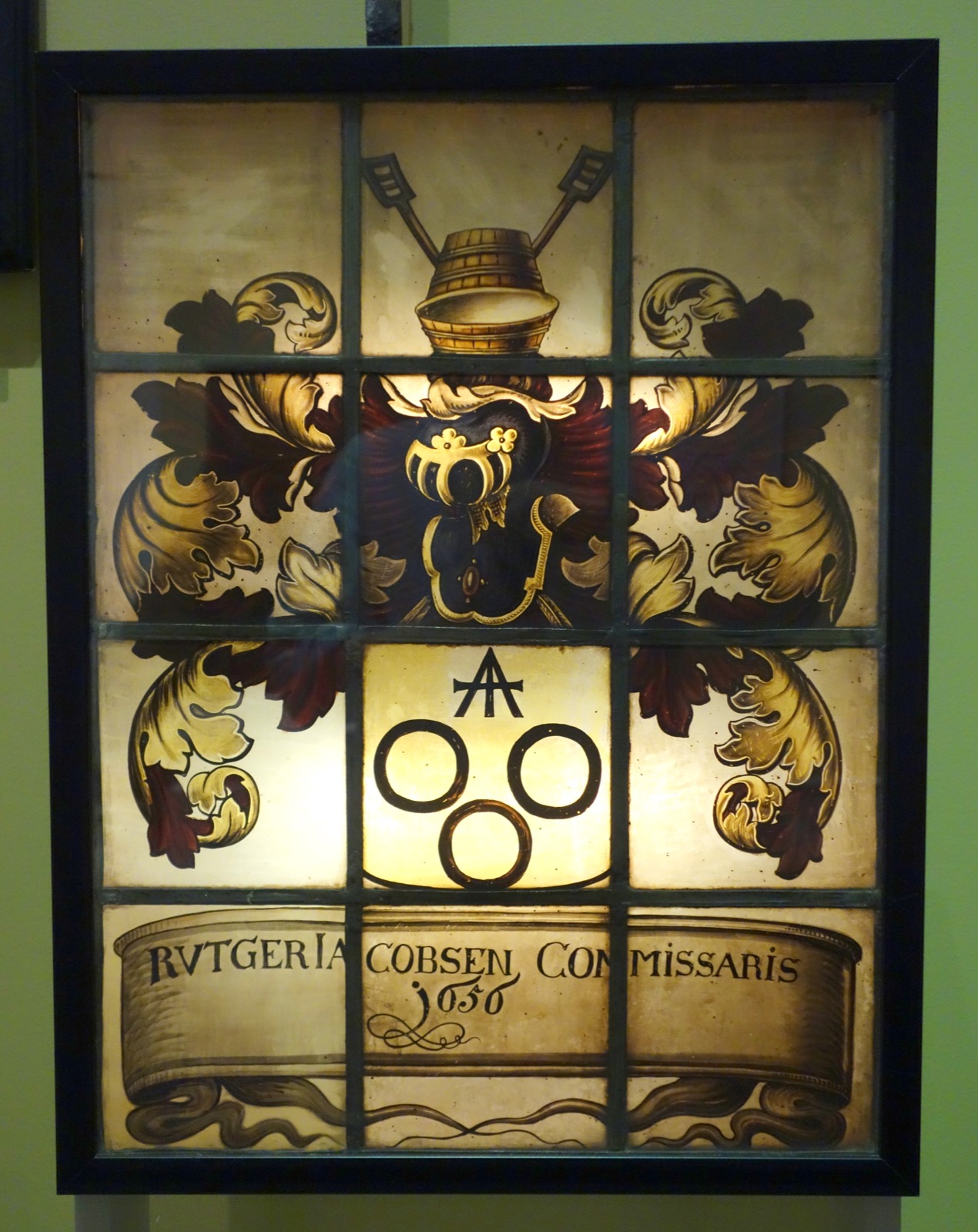
In 1649–50 the brewers Goosen Gerritsz and Rutger Jacobsz leased it for 450 guilders a year. According to Munsell, the one-guilder duty "amounted in the first year to 230 gl." Single source If that's right, the colony brewery made something like 230 barrels of beer a year. Inference
A brewery inside the fort
Meanwhile, inside the West India Company's Fort Orange, the Company carpenter Jan Labatie got permission on 15 June 1647 to build a house "and use it as a brewery without injury to the Interests of the Company." The rent: "six merchantable Beavers" a year. Solid56 Labatie was no ordinary carpenter. He spoke Mohawk, briefly commanded the fort in 1649, and sat as a magistrate in 1652. Solid There's no record of his brewing past the mid-1650s. Single source
Beverwijck: a dozen breweries on Brewer's Street
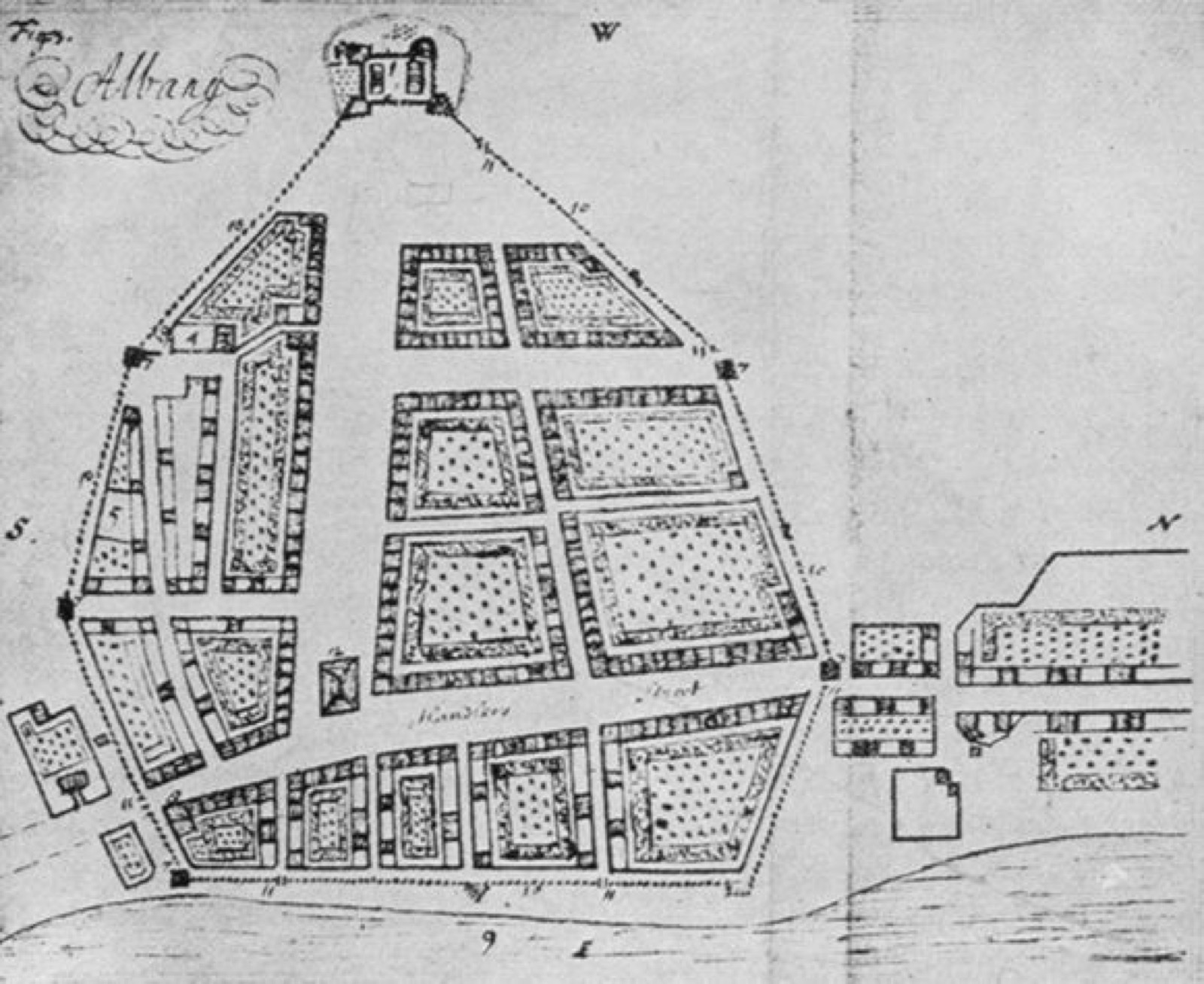
In 1652 the Company carved the village of Beverwijck out of the patroon's land around the fort. At its height it had about twelve breweries, with eight surviving through the 1650s. Single source27 They fell into two groups. Riverside breweries on the east side of today's Broadway had river water and their own landings, and lasted for generations. Breweries on the Ruttenkill to the west closed quickly. Single source The breweries that can be identified by name and lot in the deeds and court minutes number about ten to twelve, which agrees. Approximate
Thanks to Jonathan Pearson's 1869 translation of the early deeds, we can walk those lots today. 8
- The Exchange block (Broadway between State and Dean): a brewery run by Pieter Hartgers, Volckert Jansz Douw and Jan Thomasz by 1656. It passed to Harmen Rutgers and then to the Van Schaicks, and Pearson says it stayed in the family "to 1785 or later." Solid Gravina and McLeod think it lapsed by 1737. Disputed
- Broadway between Steuben and Maiden Lane: Frans Barentsz Pastoor's brewery, which became Philip Hendricksz Brouwer's and then Jan Dircksz van Eps's. Solid
- Broadway between Hudson and Division: Pieter Bronck's brewery, later Albert Ryckman's. Its neighbor was Leendert Philipsz Conyn, the future father-in-law of Harmen Gansevoort. Solid
- On the Ruttenkill: Rutger Jacobsz's breweries on State Street and Beaver Street. Solid
By the eighteenth century, Market Street, today's Broadway, was so lined with breweries that deeds and council minutes simply called it "Brewer's Street." Solid9
Paid in beaver
Beverwijck was a fur-trading town, and its breweries were bought and sold in pelts. On 11 December 1656 Frans Pastoor auctioned "his house, lot, brewery and garden," payable "in good whole merchantable beavers." The equipment list reads like a brewhouse inventory: "an undertrough, a cooler, a brew kettle, a wort kettle, a wort tub … and twenty stout half barrels and beer tubs … a brewer's sling … and a scoop." Solid8
The high bid was 3,630 guilders. The winner flipped it the same day to the brewer Philip Hendricksz for 4,000 guilders "in good whole merchantable beavers, at eight guilders a piece", which is 500 pelts, for a one-day profit of 370 guilders. Solid Seven years later, in April 1664, Philip's administrators sold the same "house, brewery and mill house … together with a kettle, two tubs and a cooler" for just 1,150 guilders. Solid The price had collapsed by more than two-thirds, just months before the English conquest. Inference
Convert Beverwijck money
The deeds reckoned a beaver pelt at 8 guilders (1656–61) and valued seawan (wampum) at 10 guilders to the beaver (1657). Solid
Debts ran on beaver too. When Pieter Bronck mortgaged his brewhouse in 1661, he owed 2,272 guilders "in beavers" at 12½% interest, which the deed spells out as "one guilder for each beaver." Solid Bronck's kettle, listed in a draft sale around 1660, held "eleven half barrels," the only kettle size found in the records, a little over five barrels a brew. SolidApproximate
Tapsters versus the tax man
Beer was the colony's great taxable commodity, and the court minutes of Fort Orange read like a decade-long fight between the excise farmers and the people who poured.
The trades were kept strictly apart. Brewers made beer, licensed beer carriers moved it, and tapsters sold it by the can. When Pieter Bronck was caught tapping strong beer in May 1655, the court barred him "for the reason that he brews the same." Solid10 When the brewer "Flip" let his servant carry beer to a tapster's cellar "without the help of the beer carrier" in 1658, the officer demanded a 200-guilder fine and a two-year suspension. Solid11
The tax was collected by an excise farmer, a private citizen who bought the right to collect it. From 1654 no strong beer could leave a brewery without his permit. The court did draw one line: the farmer could ask "what beer is brewed or imported," but he couldn't search the brewers' houses. Solid In 1657–58 the excise on a tun of local beer was 4 guilders, and on imported beer 6. Dutch beer was still crossing the Atlantic to Fort Orange. Solid8
Some tapsters simply refused to cooperate. In 1655 three Fort Orange tavern keepers wouldn't let their casks be gauged. One was Pieter Adriaensz, nicknamed "Soo Gemackelyck," roughly "so easy-going," and another was Adriaen Jansz, alias "Appel." Stuyvesant ordered them prosecuted for "fraud and cheating of the tax collector," and when they still refused, brought to New Amsterdam "by force if necessary." Solid1213
"A wager is not accepted in payment before the court."Fort Orange court, 2 March 1660
Beer priced in pelts and shell beads
Prices were set by law. In February 1653 innkeepers were capped at 9 stivers for a can of beer. Solid In November 1658 Stuyvesant's council priced a tun of strong beer at 10 guilders in silver, 15 in beaver, or 22 in sewant, the shell-bead wampum that served as small change; small beer cost about a third as much. Solid14 So beer was priced in pelts and wampum. No source found shows beer itself serving as money, although a half-barrel did change hands as wages: in 1658 a man caught with untaxed beer said "he earned it with his fellow workers." Solid
| Date | Price | Confidence |
|---|---|---|
| 1642 | Beer "at 20 guilders a barrel," called "very extravagant" | Solid |
| Feb 1653 | Innkeepers capped at 9 stivers a can of beer | Solid |
| Nov 1658 | Strong beer: f10 silver / f15 beaver / f22 sewant per tun. Small beer: f3 / f4½ / f6 | Solid |
| c. 1665 | Small beer at f4 a half-cask, in seawan, on the Van Rensselaer farm | Single source |
| c. 1665–66 | English law: innkeepers may not sell beer "above two pence the quart" | Solid |
Beer and the Haudenosaunee and Mahican trade
Fort Orange existed to trade with Mohawk and Mahican hunters, and selling them beer was both tempting and forbidden. On 6 October 1656, with Stuyvesant himself presiding, the innkeepers Egbertje Egberts and Dirckje Harmens were each fined 300 guilders for trading beer for tobacco pouches. A Brazilian-born 20-year-old, Willem Hoffmeyer, who had paddled half-barrels upriver by canoe, got 500 guilders and three years' banishment. Solid1516 One of the magistrates on that bench was the brewer Rutger Jacobsz. Solid In 1689 the city granted a lot to a "Wm hoofmayer" right next to a brewhouse. It may well be the same man, back in the beer business. Inference
The English kept the ban but enforced it with a different kind of trickery. On 9 April 1678 the excise collector Richard Pretty sued the brewer Harmen Rutgers for selling "good beer to the Indians," demanding 800 guilders. Rutgers said he'd sold only "a calabash of beer, it being the tail end in the cask," to two men with a sick child, and accused Pretty of bribing them to make the buy. The court agreed it had been a "crafty scheme," dismissed the case and made Pretty pay costs. Solid17
Maria van Cortlandt's brewery and the ice flood of 1666
In April 1665 Jeremias van Rensselaer, director of the patroonship, told his family he had taken up brewing "for the sake of my wife." Maria van Cortlandt had grown up in her father's New Amsterdam brewery, where she ran the beer sales and found the customers. Solid18 That autumn Jeremias was buying upriver hops for his father-in-law's brewery in New Amsterdam, from growers and from "three or four persons" sent "out to the woods to pick hops." He preferred wild "bush hops" to cultivated "pole hops." Solid In the 1660s, then, upper Hudson hops flowed down to Manhattan's brewers, the reverse of the trade two centuries later. Inference
Then the river took everything. On 7 April 1666 the ice went out and carried off about forty houses and barns, including the patroon's house and "the brewery, the new as well as the old." Solid Volckert Douw's brewery on Papscanee Island was swept away in the same flood. Single source Jeremias rebuilt in the Greenbush, then tore it down again because he couldn't get beer across the river in spring and fall, "at the most important season," and moved the brewery to the Fifth Kill, out of reach of the ice. Solid The English governor, Richard Nicolls, liked the result enough to order four barrels of good, well-malted beer for Christmas 1667. Solid
Harme de Brouwer and the brew-kettle bet
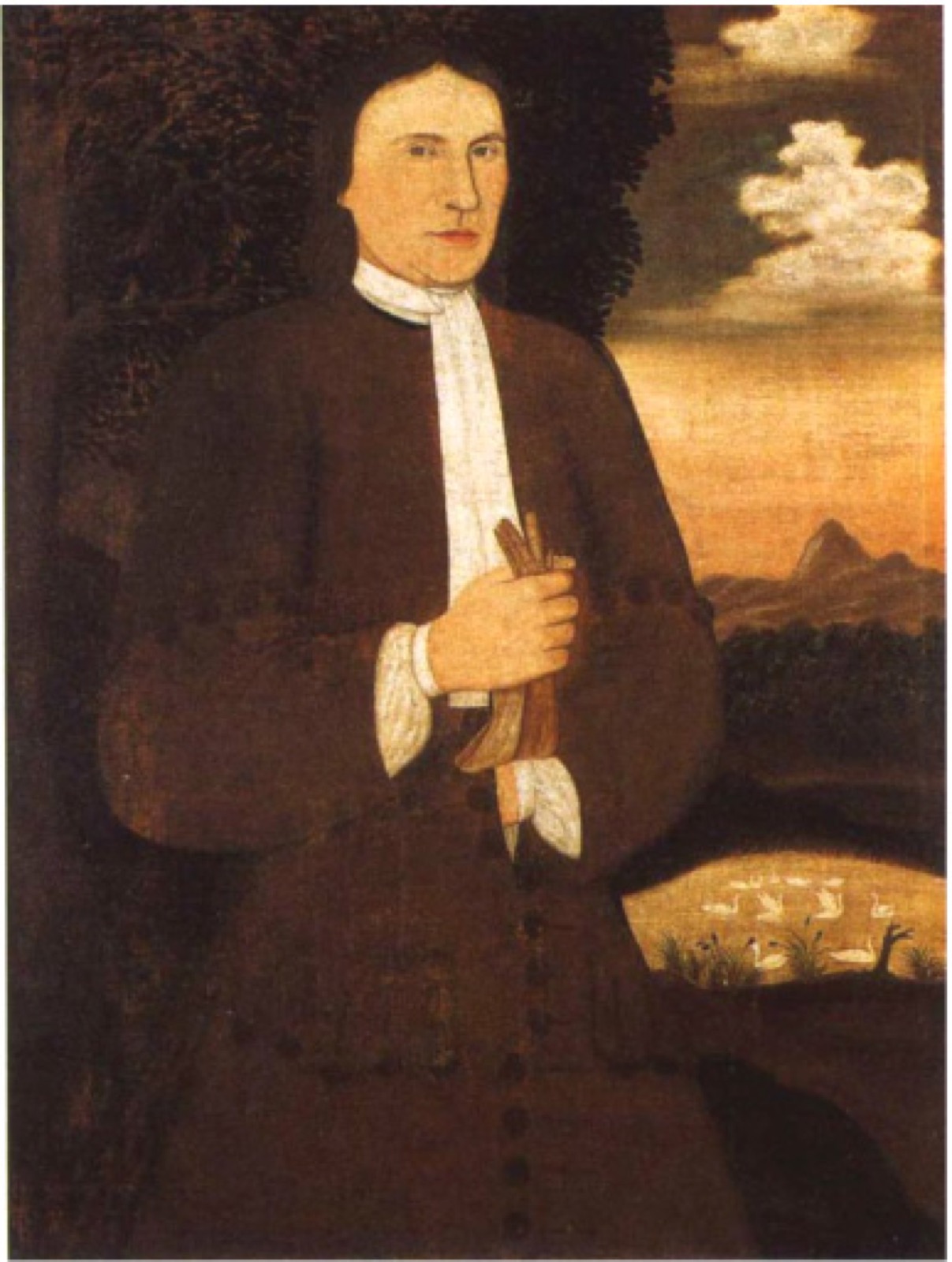
The family to follow through Albany's colonial brewing is the Gansevoorts, Herman Melville's mother's family. Harmen Harmensz Gansevoort, known as "Harme de Brouwer," married into a brewing family. Solid In 1677 he bought the lot on the south corner of "Cow Street," now Broadway, and Maiden Lane, "and here he erected a brewery." Solid819 A witness in a 1678 lawsuit remembered him saying that his wife would never see a happier day, because "he could support himself by brewing and the children could go to school." Solid His brewery doubled as a drinking room: around 1680 a witness described coming "into the brewery of H. Gansevoort" to find a very drunk man gossiping about a neighbor's daughter. Solid
Did Gansevoort really bet his brew kettle?
A much-repeated story says that in October 1660, drinking at his brewery, Gansevoort argued with Claes Bever over which of them had been the lowlier man back in Holland, a hog driver or a shepherd. The stake grew from a half-cask of beer until Gansevoort put up his brew kettle against a canoe-load of firewood. He then failed to show up in court, and the judges gave Bever the kettle. Single source20
Our research went to the court records. Both translations of the Fort Orange court minutes (van Laer, 1920–23, and Gehring, 1990) contain no such case. Solid21 The same court had ruled that spring that "a wager is not accepted in payment before the court." But two months after the supposed bet, in December 1660, a man called Hendrick the confectioner sued Claes Bever for "a brew-kettle, which he bought of the defendant." Bever denied selling him one. Solid11
So: Bever was arguing over somebody's brew kettle at just the right moment, which may be the trace behind the legend. Inference The case might also have gone to the patroon's own court, whose records from these years mostly don't survive in print. The likeliest source for the full story is Alice Kenney's 1969 family history, The Gansevoorts of Albany, which we haven't yet been able to check. Disputed
What is solidly documented is the coda. Writing in 1858, Joel Munsell recalled that the old brewery on the site, "known as Harme Gansevoort's brewery," had made "many a barrel of good beer, made of wheat." It stood until 1807. When the dome of Stanwix Hall went up on the lot in 1833, "the Dutchmen of that day called it old Harme Gansevoort's brew kettle turned upside down." Munsell passes on a joke too: when the brewer wanted to give a choice batch special flavor, "he would wash his old leather breeches in it; showing that the slanders against Albany brewers and Albany ale is not a new thing." Solid22
English Albany: brewers, laws and slavery
The English took New Netherland in 1664 and renamed Beverwijck "Albany," but the brewers stayed. The new Duke's Laws of 1665 allowed only people "known to have Sufficient Skill and knowledge in the art or Mistery of a Brewer" to brew for sale, and let buyers sue over beer made "unfit, unwholesome and useless" by bad malt, bad brewing or "unwholesome Cask." Solid23 Unlike the Dutch, the English court let brewers sell by the glass. When two innkeepers asked in 1677 to stop brewers retailing beer "by the small measure," the court said it "can not forbid any of the inhabitants" to do so. Solid
The clearest early evidence of enslaved labor in Albany brewing comes from the city's 1686 by-laws. They banned any "Negroe or other Slave" from driving a cart in the city, with a single exception: "Brewers drays or Carriages for Beer only excepted." Solid24 Enslaved men, in other words, drove Albany's beer through its streets. The brewing households of the next century held enslaved people too: the Gansevoorts' Market Street complex "was served by numerous slaves," and in 1800 Gen. Peter Gansevoort's home was "served by four slaves." Solid2526 No record found so far names an enslaved worker at a particular brewery.
Brewers ran the city as well as supplying it. In August 1695, to pay its bills, the city council resolved to brew "3 pypes of table Beer," and appointed two of its own members to brew it, Benoni van Corlaer and Albert Ryckman. Solid27 Ryckman, "perhaps the most prominent Albany brewmaster of the late seventeenth century," supplied the fort and the Dutch church's funerals, and served as mayor of Albany in 1702–03. Solid28
Wheat beer and the 1756 census
Colonial Albany's beer was made from wheat. The Swedish naturalist Pehr Kalm, passing through in 1749, found that "they do not sow much barley here … Wheat is so plentiful that they make malt of it." Albany brewed with Hudson River water, which was "generally quite muddy, and very warm in summer," so it was kept in cellars "in order that the slime may subside." And with supper, Kalm noted, Albanians "commonly drink very small beer, or pure water." Solid3
The "best Ale is made of Wheat Malt" quote
A line often attributed to Daniel Denton's 1670 Brief Description of New-York says New York's "best Ale is made of Wheat Malt, brought from Sopus and Albany." Our research couldn't find it in three editions of Denton's text, and "about threescore miles from New-York" fits Esopus better than Albany. Until the original page is found, treat the attribution as unverified. Disputed29
When the British army counted Albany's households for quartering in November 1756, it listed five brewers: Bastian and Tunis Fisher (Visscher), a "Valere Oldhood," a "Tobias Wrightman," and "Lenard Ganseford," the 73-year-old Leendert Gansevoort, next door to his merchant son. Solid30 That's five brewing households in a city of roughly 330. Approximate
From wheat to barley: Peter Gansevoort
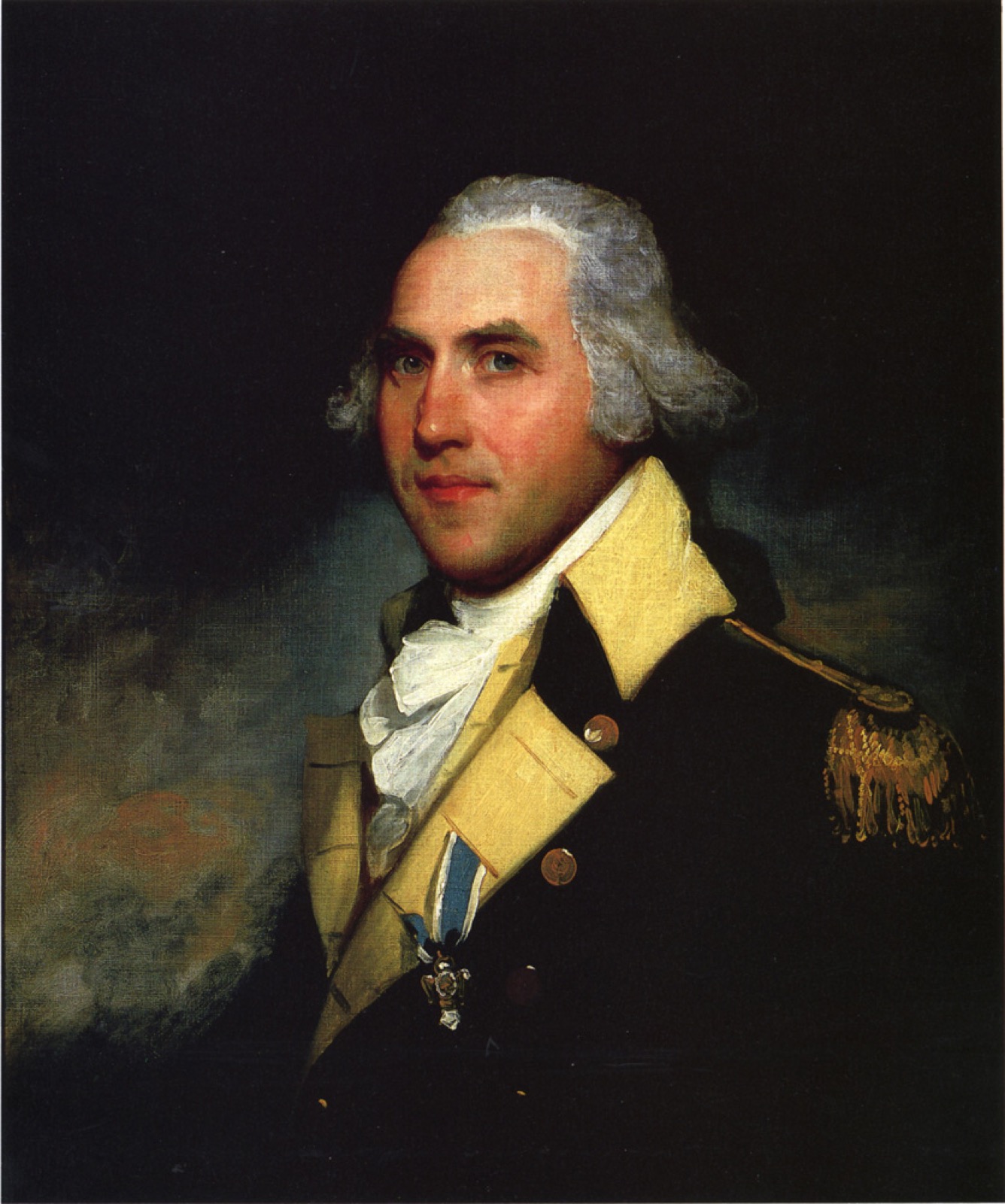
Leendert's son Johannes ran the family brewery from 1762, signed the Albany Sons of Liberty constitution in 1766, and died in 1781. Solid The brewery then passed to his nephew, Peter Gansevoort, the hero of Fort Stanwix and Herman Melville's grandfather. Solid26
Peter's advertisements show the old Dutch beer giving way. In March 1794 he offered "six shillings a bushel for any quantity of good merchantable barley, delivered at his brewery, at the corner of the market house," and that October seven shillings. Solid27 By July 1798 he was selling three porters, table beer and bottled ale. Single source31 Somewhere between Kalm's visit and Gansevoort's ads, Albany switched from wheat to barley, most likely after the Revolution as Scots and New Englanders arrived. Inference
The Gansevoort brewery stopped brewing around 1801–1805 and was torn down in 1807. Solid By then a Scottish deacon named James Boyd had been brewing on Arch Street for a decade, and Albany's next era had begun.
Sources for this page
- Van Rensselaer Bowier Manuscripts (van Laer, trans., 1908) archive.org
- Gravina & McLeod, Brewery History 157 www.breweryhistory.com
- Munsell, Annals of Albany vol. 1 archive.org
- Minutes of the Court of Rensselaerswyck 1648–1652 archive.org
- Munsell, Annals of Albany vol. 4 archive.org
- NAHC Encyclopedia encyclopedia.nahc-mapping.org
- Albany Institute www.albanyinstitute.org
- Pearson, Early Records of the City and County of Albany (1869) archive.org
- NYS Museum: Albany brewers exhibitions.nysm.nysed.gov
- Minutes of the Court of Fort Orange and Beverwyck, vol. 1 archive.org
- Minutes of the Court of Fort Orange and Beverwyck, vol. 2 archive.org
- NAHC Encyclopedia encyclopedia.nahc-mapping.org
- NAHC Encyclopedia encyclopedia.nahc-mapping.org
- NAHC Encyclopedia migrate.nahc-mapping.org
- NAHC Encyclopedia encyclopedia.nahc-mapping.org
- NAHC Encyclopedia encyclopedia.nahc-mapping.org
- Court Minutes of Albany, Rensselaerswyck and Schenectady (NNI) newnetherlandinstitute.org
- Correspondence of Jeremias van Rensselaer (NNI) newnetherlandinstitute.org
- NYS Museum: Harmen Gansevoort exhibitions.nysm.nysed.gov
- Hudson Valley Wine Magazine (Gerry Lorentz) hvwinemag.com
- Gehring, Fort Orange Court Minutes 1652–1660 (NNI) newnetherlandinstitute.org
- Munsell, Annals of Albany vol. 9 (1858) archive.org
- The Colonial Laws of New York, vol. 1 archive.org
- Munsell, Annals of Albany vol. 7 archive.org
- NYS Museum: Harme Gansevoort exhibitions.nysm.nysed.gov
- NYS Museum: Peter Gansevoort exhibitions.nysm.nysed.gov
- Munsell, Annals of Albany vol. 3 archive.org
- NYS Museum: Albert Ryckman exhibitions.nysm.nysed.gov
- A Good Beer Blog abetterbeerblog427.com
- NYS Museum: 1756 census exhibitions.nysm.nysed.gov
- A Good Beer Blog abetterbeerblog427.com